
All in all, it was all just bricks in the wall.
Pink Floyd, Another Brick In the Wall, Pt. 1
I hope you’ll forgive me for my disjointed writing style of last night! After walking all day and resting lightly at night, I’ve realized that to think my clearest, I need to do more to keep my mind sharp. I’m happy to report that I’m alert again, excited to lead you through my thoughts on walls and other barriers.
In addition, I’m happy to be writing to you from Wittenberg today. In the birthplace of Lutheran Protestantism, walls greatly shape your experience.
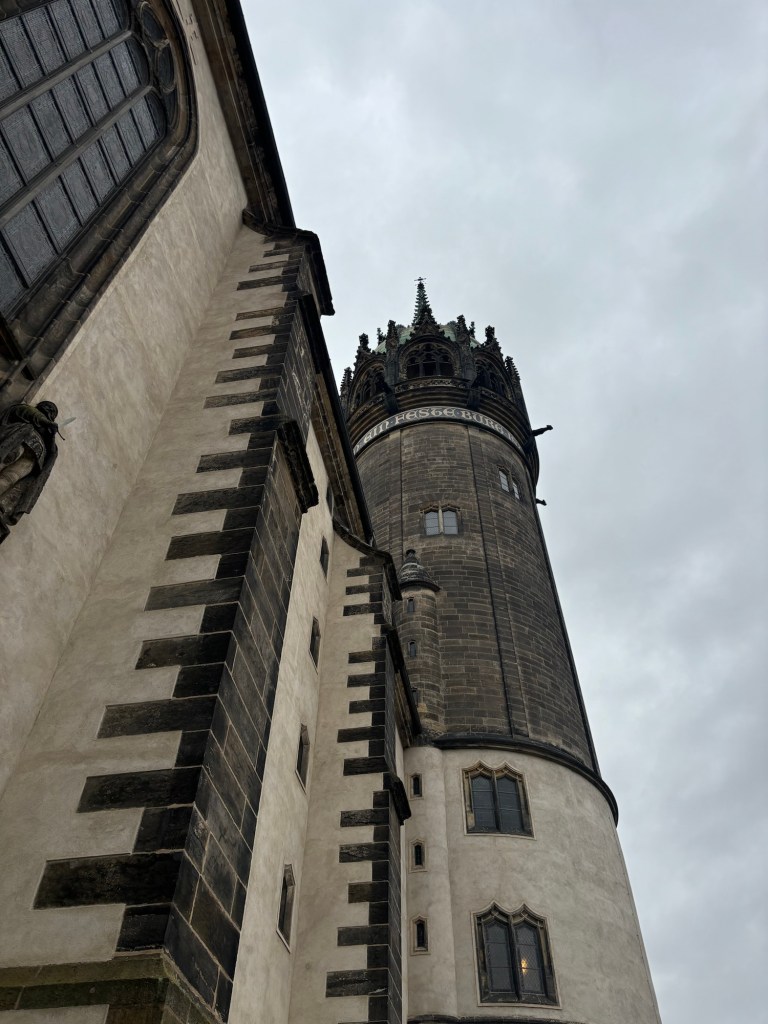
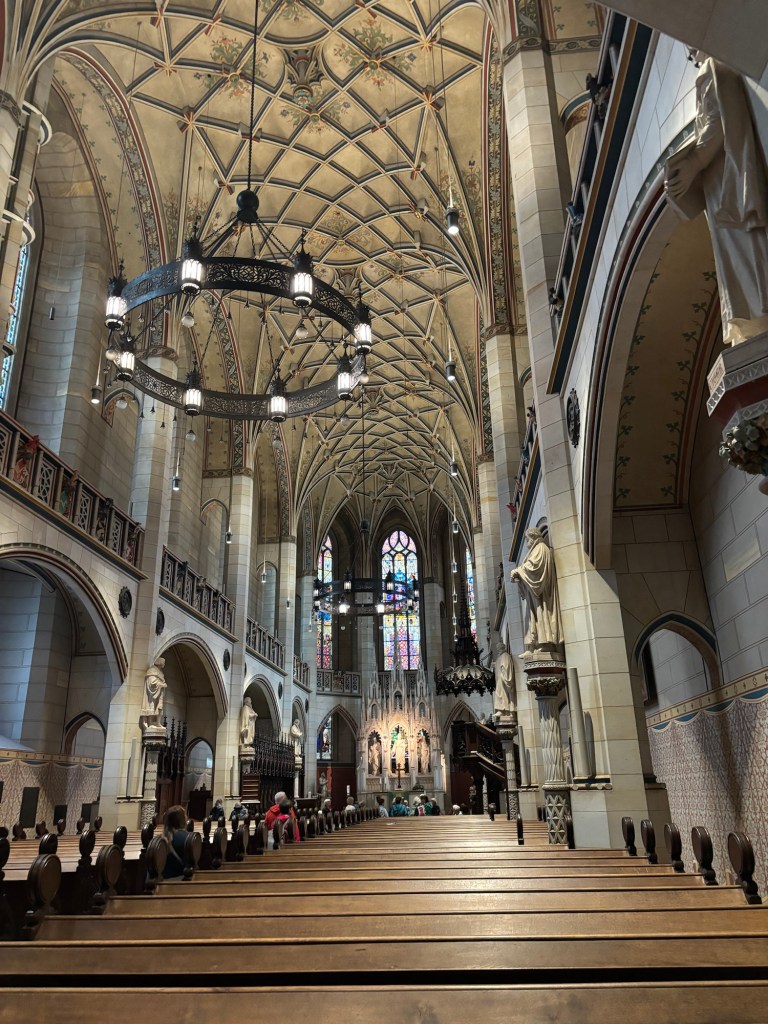
As a building type, the cathedral underwent a huge shift when architectural innovations enabled taller, thinner walls. Flying buttresses, rib vaults, and other technologies are trademarks of the architecture period we now know as Gothic. While sitting in a Gothic cathedral, one sees the walls themselves reaching up towards the Christian Heaven. Before this time, walls were short and thick, the only way to keep heavy stone standing. After this period, walls could direct you to the divine.
I was wondering, can walls have a positive impact on religion? In my post yesterday, I reflected on the unjust barriers of religious persecution, but today, I’m considering what a barrier can do for you if you make it for yourself. I think that some kind of willing separation is an important part of spirituality.
Elective separation is a part of joining any group. The act of choosing to be a part of something, such as the parent teacher association or a Facebook group, means choosing to separate from non-participants. Certain groups will require more separation than others, but the principle is the same.
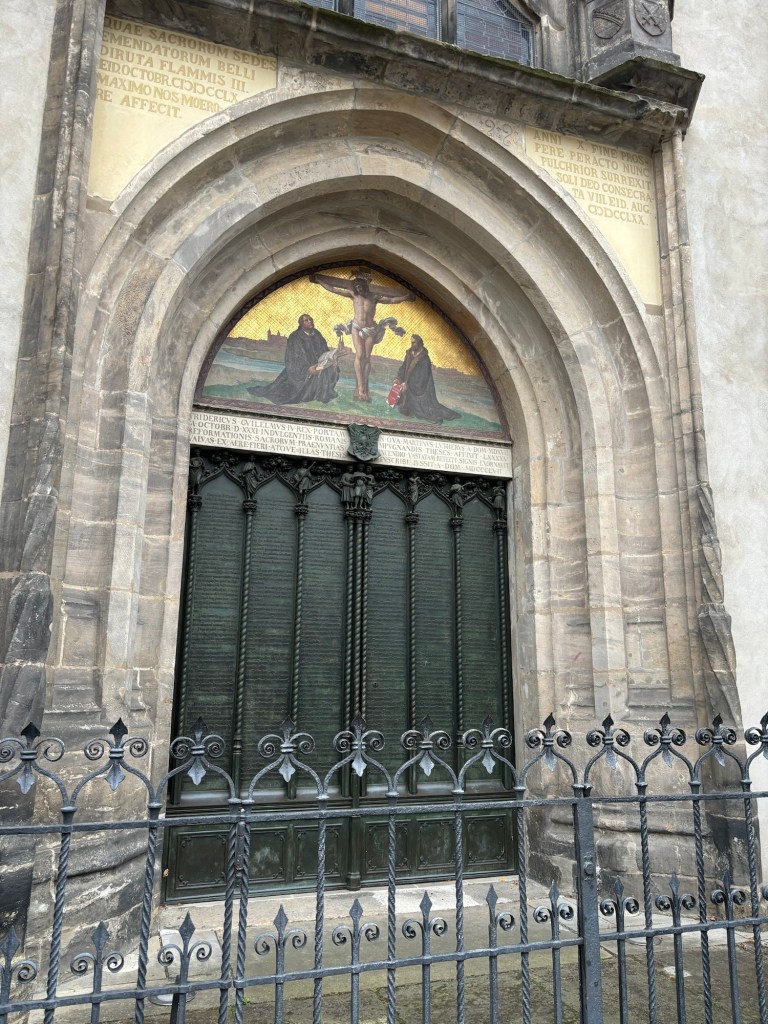
It’s easy to see the need for religious separation in the Wittenberg Protestants. Martin Luther went from someone of no consequence to a threat to the Pope. He and his followers had to choose if their theological questions were worth separating from Catholicism; they answered that yes, it was worth separation. They built new walls to differentiate their faith.

Separation isn’t necessarily a bad thing in religion. If we are to have different beliefs, separation is a necessity rather an option. There can be belonging in separation, where we love people who have different boundaries and barriers than ourselves. So the real question is, what do we do with walls? Is it a source of pride? Do we force additional walls on others? That’s where the danger of separation begins.
I hope that we can set ourselves apart in holy ways, rather than hateful ways.
Ciao for now!

Lutheran Protestantism
Major branch of Christian Protestantism. Based in doctrine first presented by Martin Luther (1483-1546) in an attempt to reform the Roman Catholic church. Focus on grace, faith, scripture, and preaching.
“What is Lutheranism?” Hope Lutheran Church. (https://www.hopelutheran.ca/about/what-is-lutheranism)
Martin Luther
1483-1546. German monk, theologian, and reformer. “As a young monk, Martin Luther doubted and despaired of his faith. He found the redeeming message in the Bible. However, his knowledge contradicted the ecclesiastical doctrine of the time and the theologian Luther clearly expressed his criticism. In 1517 he published his 95 theses against the trade in [indulgences] and wanted to stimulate a reform of his church. The movement he thus triggered took over not only church life, but also all areas of society. Today, Martin Luther is world famous as the reformer and founder of Protestantism.”
“Martin Luther.” Evangelische Kirche in Deutschland. (https://www.ekd.de/Martin-Luther-10870.htm)
Pope
Roman Catholic leader. “The title pope, once used with far greater latitude, is at present employed solely to denote the Bishop of Rome, who, in virtue of his position as successor of St. Peter, is the chief pastor of the whole Church, the Vicar of Christ upon earth.”
“The Pope.” New Advent Catholic Encyclopedia. (https://www.newadvent.org/cathen/12260a.htm)
Catholicism
Prominent Christian branch. Begun during the Apostolic Age of Christianity, soon after the death of Jesus Christ. Over time, the bishop of Rome became the most powerful leader in this church. Many councils met over time to determine doctrine and clarify beliefs. Great Schism of 1054 led to separation between Catholicism and Eastern Orthodoxy. Protestantism split off of Catholicism. Beliefs include sacraments, the authority of scripture and tradition together, and that the Catholic Church is the one true church.
“Is Catholicism a Branch of Christianity?” Christianity.com. (https://www.christianity.com/church/denominations/what-is-catholicism.html)
 Hallow
Leave a comment