
Let every voice be thunder, let every heart beat strong / Until all tyrants perish our work shall not be done / Let not our memories fail us, the lost year shall be found / Let slavery’s chains be broken the whole wide world around
Peter, Paul and Mary, “Because All Men Are Brothers”
Yesterday was kind of a tough day for me. I felt very tired and overwhelmed by the people around me. Honestly, I was feeling in the mood to lock myself in a room for twenty-four hours and not come out. But a simple conversation with a man at our table snapped me out of it.
My friends and I met Imad, and we all talked about what spirituality means to us. Just getting a new perspective lifted my mood. I think that a lot of our discussion illustrated what I’ve found relatable and informative about the Protestant Reformation.
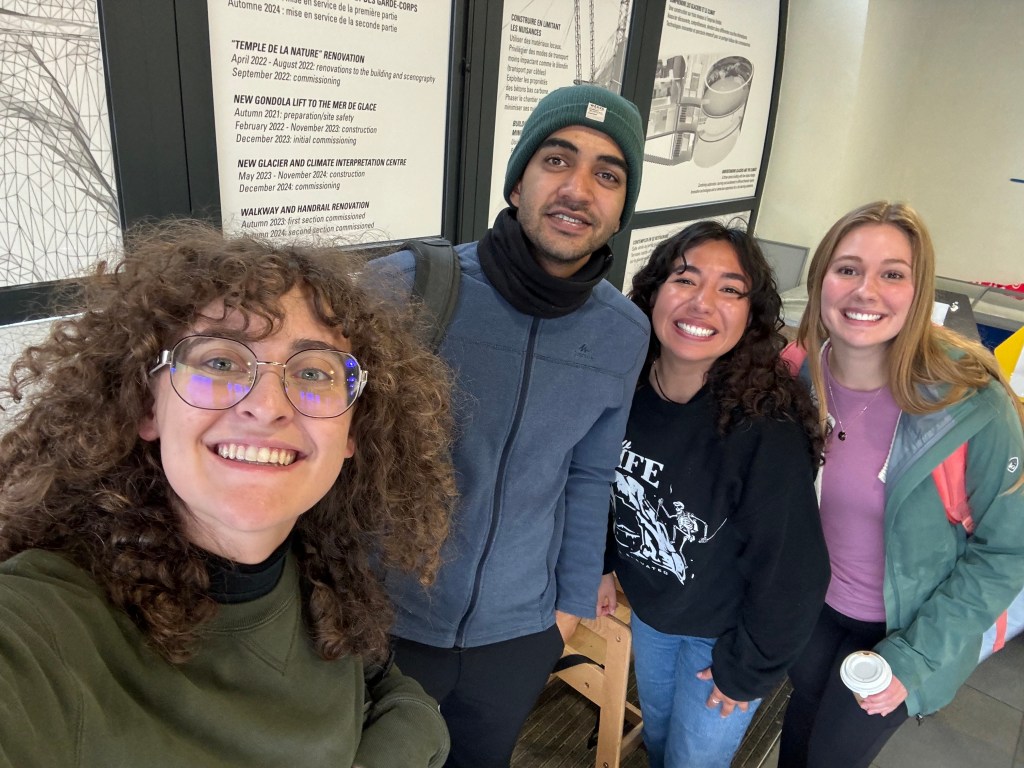
I loved Imad’s thoughts on individual spirituality. He shared that the times he’s felt closest to the divine was when he was in nature, by himself, finding answers to questions and feeling close to God. He believed that even today, in a world where many are confused about their spiritual path and lose their way, the divine is communicating and leading people along.
I think that this train of thought fueled a great deal of Reformation thought. An issue that reformers bumped up against was the pope’s supreme authority in the Catholic Church of the day. While the pope was supposed to keep the church exactly in line with God’s will, reformers saw that the church was actually straying from biblical directives.
Like my friend Imad shared, Reformation leaders like Martin Luther and John Calvin felt individually connected to God. Through their own study and faith, they were led to God’s path and chose to follow it. We owe much of Reformation thought to the belief that God communicates with His creation (people on earth).
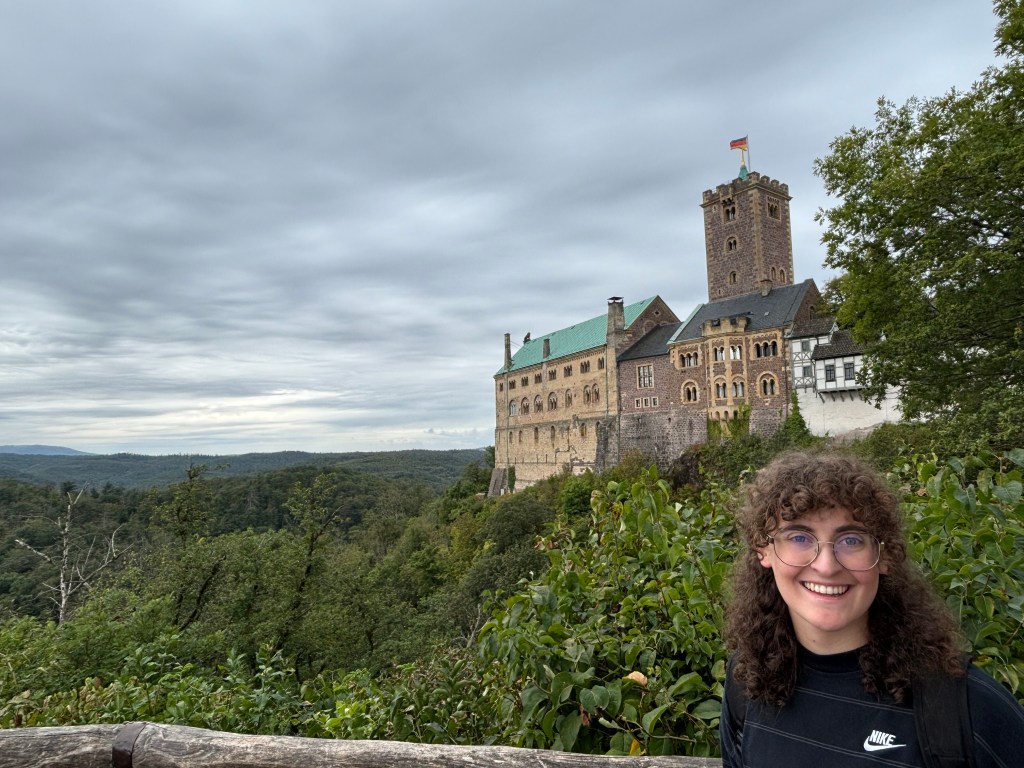
An example of this can be found in the magnificent Wartburg Castle in Eisenach, Germany. Here, Frederick the Wise housed Martin Luther for months while the theologian translated the New Testament. Frederick didn’t have to do this; in fact, it would have been much safer to leave Luther to whatever fate the Catholic Church decided for him. But, because of his beliefs, he decided to protect one of the most important thinkers of the entire Protestant Reformation.
There’s a lot I want to change about myself when learning about this. For me, it makes me want to be more receptive to spiritual knowledge without getting swayed by the opinions of others.
How would your life change if you were more receptive to God’s guidance?
Another aspect of the Reformation that has been impactful to me was learning about the firm belief that reformers had. Rarely did reformers agree in every theological aspect, but each held onto their beliefs until the end because they knew that they were divinely inspired.
Once such example of this is Ulrich Zwingli, a man I hadn’t heard of until a few days ago. Unlike his contemporaries, this Swiss theologian believed in bringing about justice here and now. Instead of suffering through the cruelties and unfairness of the world, Zwingli fought against it, eventually losing his life fighting for what he believed.
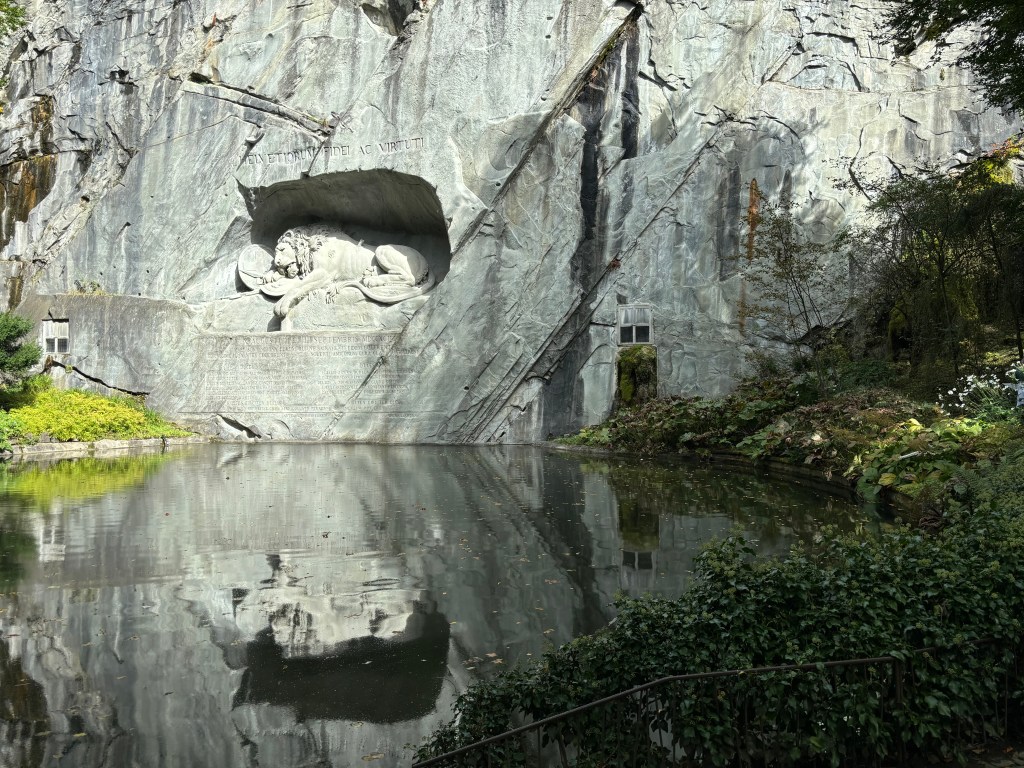
A similar sentiment is shared in the Lion Statue, found in Lucerne, Switzerland. This iconic landmark serves as a memorial to those Swiss fighters who lost their lives fighting for countries and causes that were not their own. These soldiers remain unrecognized and forgotten by the people they died for, but not to their homeland. By doing what was right, they are forever retained in Swiss memory.
The example of these notable people made me consider my own motivations. What do I fight for? And how far would I go in its defense?
A lot of lessons can be taken out of the Protestant Reformation. I’d love to hear your thoughts in the comments!
Pope
Roman Catholic leader. “The title pope, once used with far greater latitude, is at present employed solely to denote the Bishop of Rome, who, in virtue of his position as successor of St. Peter, is the chief pastor of the whole Church, the Vicar of Christ upon earth.”
“The Pope.” New Advent Catholic Encyclopedia. (https://www.newadvent.org/cathen/12260a.htm)
Roman Catholicism
Prominent Christian branch. Begun during the Apostolic Age of Christianity, soon after the death of Jesus Christ. Over time, the bishop of Rome became the most powerful leader in this church. Many councils met over time to determine doctrine and clarify beliefs. Great Schism of 1054 led to separation between Catholicism and Eastern Orthodoxy. Protestantism split off of Catholicism. Beliefs include sacraments, the authority of scripture and tradition together, and that the Catholic Church is the one true church.
“Is Catholicism a Branch of Christianity?” Christianity.com. (https://www.christianity.com/church/denominations/what-is-catholicism.html)
Martin Luther
1483-1546. German monk, theologian, and reformer. “As a young monk, Martin Luther doubted and despaired of his faith. He found the redeeming message in the Bible. However, his knowledge contradicted the ecclesiastical doctrine of the time and the theologian Luther clearly expressed his criticism. In 1517 he published his 95 theses against the trade in [indulgences] and wanted to stimulate a reform of his church. The movement he thus triggered took over not only church life, but also all areas of society. Today, Martin Luther is world famous as the reformer and founder of Protestantism.”
“Martin Luther.” Evangelische Kirche in Deutschland. (https://www.ekd.de/Martin-Luther-10870.htm)
John Calvin
Protestant figure and theologian. Born 1509 in Noyon, France. Studied civil law, but was deeply interested in church and theology. Became reform-minded towards the Catholic Church, was pushed out of many places because of his sentiments. Eventually found a place in Geneva, Switzerland; played a large role in making this city an important Protestant hub. Wrote the Institutes of the Christian Religion. Died 1564.
“John Calvin.” Calvin University. (https://calvin.edu/about/history/john-calvin.html)
The New Testament
“The New Testament is the second half of the Christian Bible…The New Testament contains 27 books written in Greek by 15 or 16 different authors between 50 C.E and 120 C.E. It can be divided into 4 groups: Gospels, Acts of the Apostles, Epistles, and Apocalypse. The New Testament contains 4 Gospels: Matthew, Mark, Luke, and John. These books tell the stories about Jesus’ life, ministry, and death…Acts of the Apostles, written by the author of the third Gospel (“Luke”), describes the spread of the Christian church from Jesus’ death to the death of the apostle Paul. Following Acts are 21 epistles or letters. Most of these New Testament books are records of correspondence between a church leader and a Christian community; the New Testament epistles address issues of Christian belief, practice, and ethics…The last book in the New Testament is Revelation, a Christian apocalypse. The author of this book, John, describes the events leading up to the destruction of this world and the appearance of the world to come.”
“Chapter 01 – What Is The New Testament?” Oxford University Press.(https://global.oup.com/us/companion.websites/0195161238/studentresources/chapter01/)
Ulrich Zwingli
1484-1531. “A pastor and theologian, based the Reformation on Bible study. In his opinion the Reformation comprised fighting social injustice…In 1519 he became a curate in Zurich and started reforming the city – the local authorities progressively adopted his views and sided with him against the bishop of Constance. His Reformation spread to Basel and Bern, and to French-speaking Switzerland, thanks to the reformer Guillaume Farel. In 1531 Zwingli died at the battle of Kappel, the chaplain for Zurich troops…Zwingli did not wish the Church to be apart from society – he believed the ecclesiastical community and the civil society were not identical but overlapped. That prompted him to fight against socio-political abuse, in the name of the Gospel.”
“Ulrich Zwingli.” Musée Protestant. (https://museeprotestant.org/en/notice/ulrich-zwingli-1484-1531/)
 Hallow
Leave a comment