
Ex voto in silver offered as a gift to the Sanctuary, linked to the desire for healing from diseases or wounds. Often in the artifacts are for this reason represented organs sick or injured, subject to the request for healing.
Plaque at Basilica della Santa Casa
What would you give to be holy?
As I’ve shared before, there are many possible answers to this question, which answers will vary person to person. Some might give up long or short hair to be closer to God. Another might choose to leave behind a pornography addiction. Others still may limit their step count on certain days to show their devotion to the divine. Through my travels so far, I’ve found that Catholic shrines answer this question in a new and interesting way.
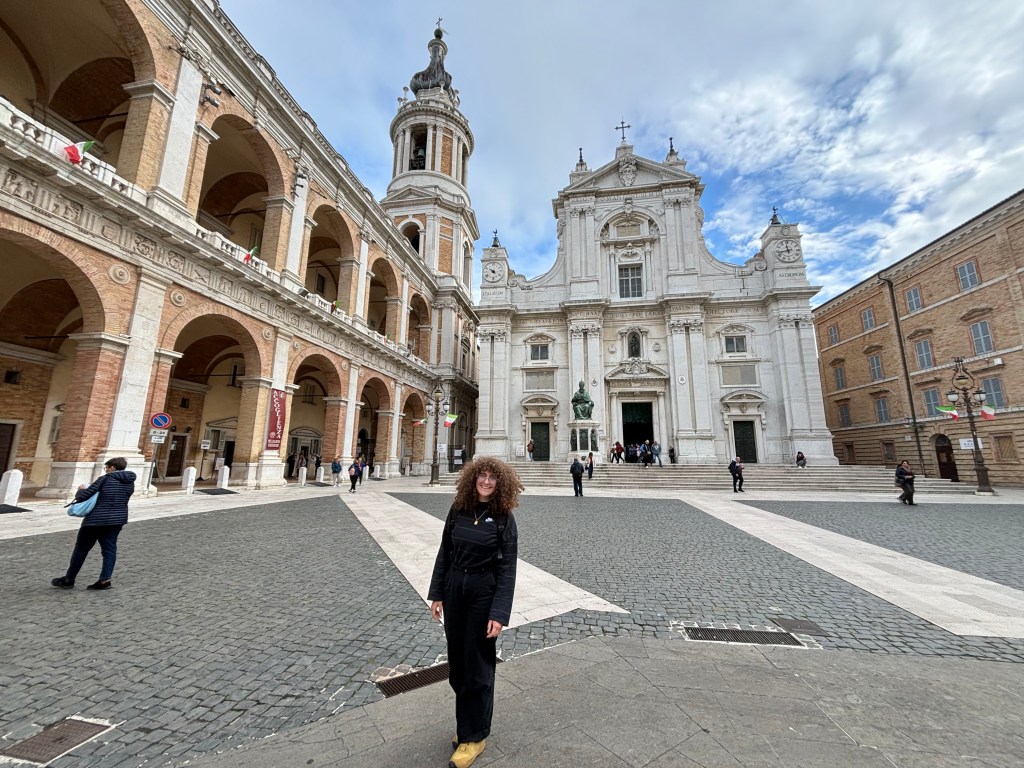
I recently visited the Basilica della Santa Casa in Lareto, Italy. This pilgrimage site calls Catholics across the world to experience it’s astounding relic: the home the Virgin Mary lived in. The story of the home’s arrival in Italy is of mystic proportion: it’s thought that angels carried this home to multiple destinations during the thirteenth century before it found its home in Lareto. To many devout Catholics, this shrine is a way to show gratitude to the Madonna, the most beloved of the saints.
It was a side chapel that truly caught my attention at this religious site, however. I learned about ex votos from a professor a few months ago, but this is the first time that I’ve seen them for myself. And boy, are they magnificent.
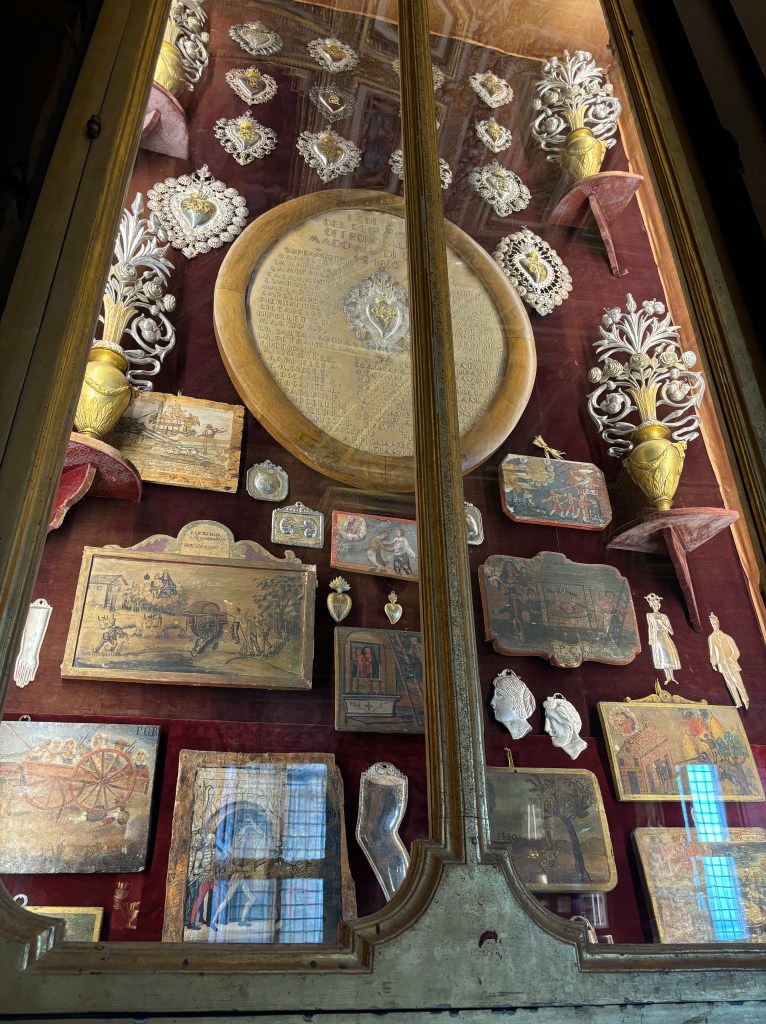
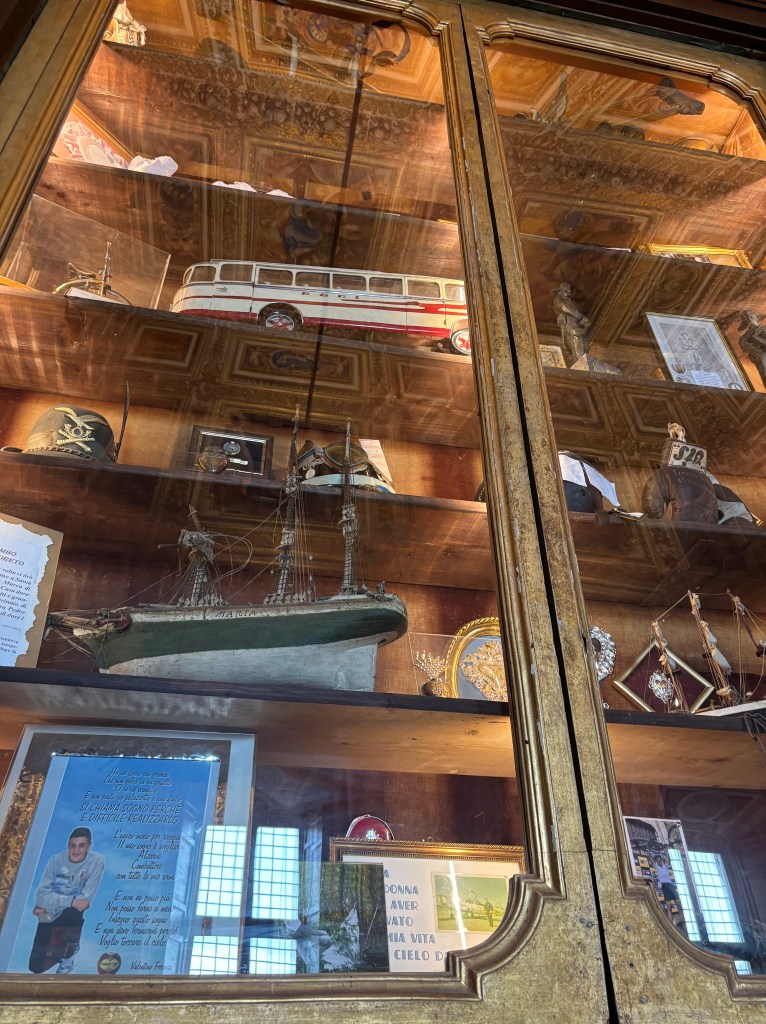
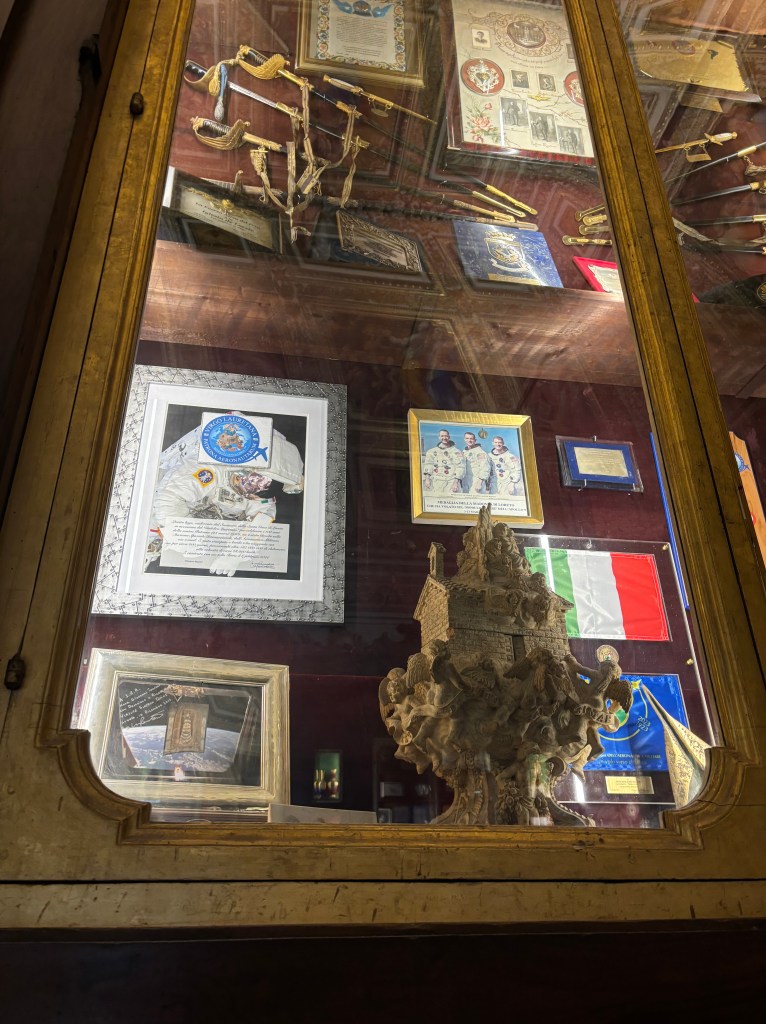
Ex votos are given as a prayer for help and are often shaped as what requires a blessing (i.e. heart, lungs, head, etc). Additionally, murals are done after a healing or miracle has taken place, depicting a terrible event watched over by the kind Madonna. It was amazing to also see the many objects that have been donated to the site as a thank you to the Virgin, such as medals and model buses.
I don’t have much time tonight, but I want to invite you to ponder what you would give for a blessing. I think it’s beautiful that these shrines house tangible sacrifices, which plead out for intercession and praise daily. It made me wonder what I could display to show my connection with and dependence on the divine.
Ex Voto
“The Latin term ex voto (short for ex voto suscepto, ‘from the vow made’) designates a Catholic votive offering placed in a church or shrine in thanksgiving for a miracle received…‘The premise of the Catholic ex voto is the vow,’ the solemn promise supplicants make, in a moment of great hardship, to give public thanks to a particular Saint if he/she intervenes to avert disaster; the ex voto, in turn, is ‘the concrete testimonial of that vow’s fulfillment,’ an object that stands as the material representation of the miracle itself (Pizzigoni 4). But ex votos are also offered in thanksgiving for unexpected miracles, in which case they function as public affirmations of God’s constant powerful presence in the lives of the faithful—poor or otherwise–and as records of their felt obligation to acknowledge it, to communicate it to others, to celebrate it. The two most common types of ex votos are object ex votos and painted ex votos.”
Mariolina Rizzi Salvatori. “Understanding Ex Votos.” (https://www.mariolinasalvatori.com/understanding-ex-votos/)
Roman Catholicism
Prominent Christian branch. Begun during the Apostolic Age of Christianity, soon after the death of Jesus Christ. Over time, the bishop of Rome became the most powerful leader in this church. Many councils met over time to determine doctrine and clarify beliefs. Great Schism of 1054 led to separation between Catholicism and Eastern Orthodoxy. Protestantism split off of Catholicism. Beliefs include sacraments, the authority of scripture and tradition together, and that the Catholic Church is the one true church.
“Is Catholicism a Branch of Christianity?” Christianity.com. (https://www.christianity.com/church/denominations/what-is-catholicism.html)
Mary
The mother of Jesus Christ. Revered by many Christian branches and sects as divine. Took part in many events in the New Testament (i.e. Annunciation, Magnificat, Nativity, Miracle of the Wedding at Cana, the Crucifixion, etc). Her role was foretold by prophets in the Old Testament. Catholics have canonized her as a saint; many consider her the greatest of the saints. Catholics believe that she was born of a virgin mother. Worship and theology devoted to her is categorized as “Marian.”
“Who Was Mother Mary?” Christianity.com. (https://www.christianity.com/wiki/holidays/who-was-mary-the-mother-of-jesus.html#google_vignette)
 Hallow
Leave a comment