
Take me out tonight / Because I want to see people and I want to see lights
The Smiths, There Is A Light That Never Goes Out
In the Hebrew Bible, the prophet Moses acts as G-d’s spokesman when he leads the Israelites out of bondage. During their long journey in the wilderness, G-d promises through Moses to guide them, acting as a shady cloud by day and a pillar of fire by night. This isn’t the first instance of light as a symbol in Jewish belief, but this story stands out to me. I think it’s because it teaches me about the constant nature of G-d.
Many religions use light as a symbol of the presence of the divine. Zoroastrians keep a sacred fire always alive in their temples; Christians revere the light that filters through stained glass windows. As one of the oldest religions, Jews hold to this symbol with the Ner Tamid, or Eternal Light, that can be seen in synagogues around the world. This is a light that hangs nearby the Torah scrolls and never goes out.
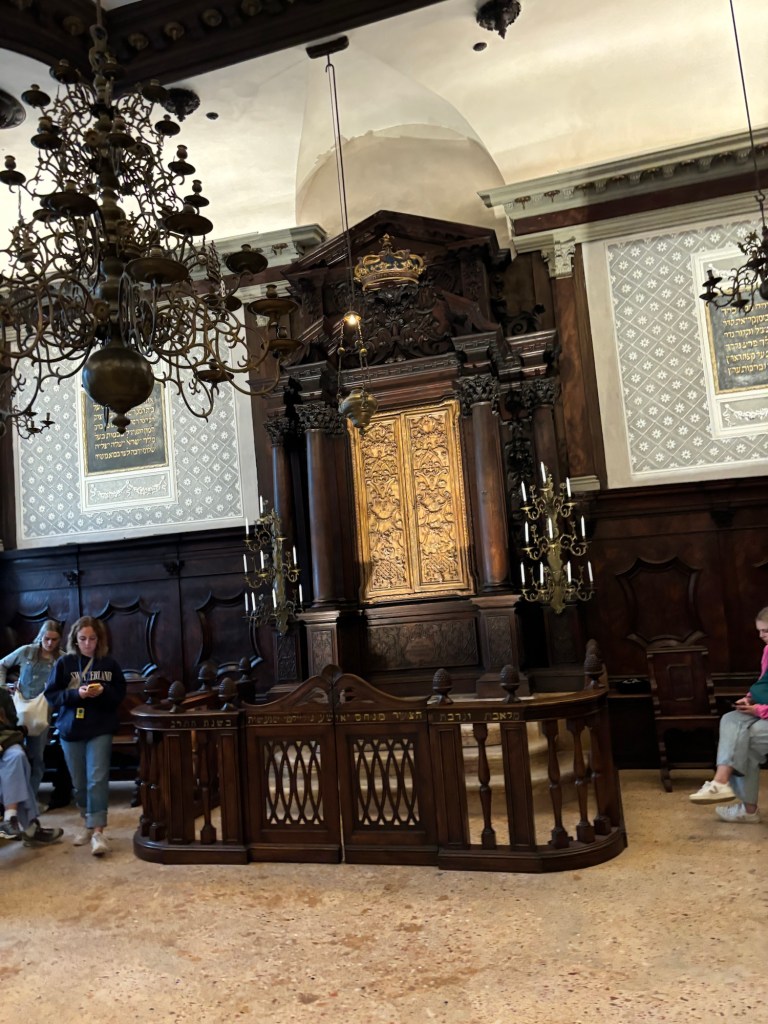
I don’t claim to know why this Eternal Light burns, or what it means to practicing Jews. But I can tell you what it means to me.
As I visited two of the synagogues found in the historic Venice Ghetto, I was very touched to see the Eternal Light in both of them. I felt warm seeing them. It felt like I was looking at something much more steadfast and certain than myself. There’s something reassuring about being in a synagogue because of that light. It’s accessible and familiar, yet brought to a new and honored level there. It isn’t big and offers little when compared to large, electric lighting systems, but its influence is easy to feel. In either a dark or light room, it would be one of the first things you notice.
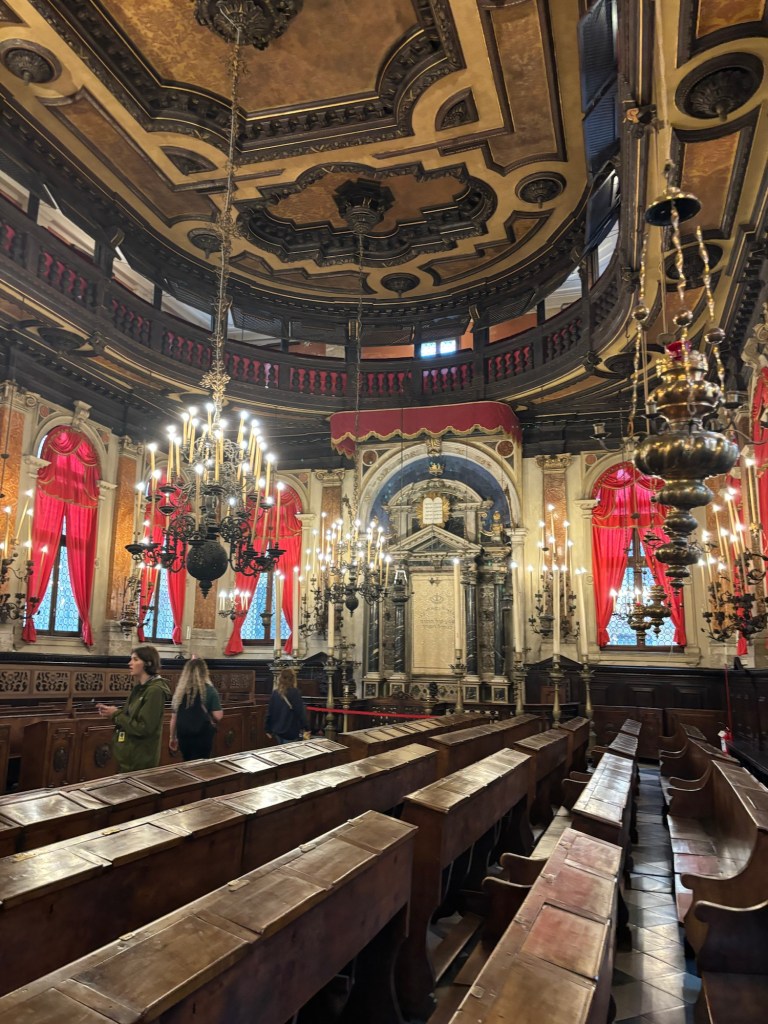
I hope you may have resonated with some of my observations, maybe thought about the divine in a new way. I don’t have much time tonight, so I’ll have to leave it there.
What’s something in your life that consistently points you to the divine?
Moses
Religious figure in Judaism, Christianity, and Islam. Great prophet and teacher amongst the Israelites in the 13th century BCE. Revealed the Ten Commandments. Many believe him to be the author or revelator behind the Torah (the first five books of the Hebrew Bible).
“Moses.” Britannica. (https://www.britannica.com/biography/Moses-Hebrew-prophet)
Zoroastrianism
Occasionally called “Parsis,” meaning Persian/Iranian. Originated in the Iran area, likely before the 6th century BCE. Founded by Zarathustra (also called Zoroaster), a prophet who received a vision of Ahura Mazda (“Lord of Wisdom”). Proselytizing efforts went slowly at first, but became the world’s largest religion at one time. Emphasis on having good thoughts, saying good words, and doing good deeds; also called the Good Religion. Scripture is called the Avesta. Believe in Ahura Mazda and other divine emanations, the sanctity of three elements (water, fire, earth), saviors, etc.
“Zoroastrianism.” Britannica. (https://www.britannica.com/topic/Zoroastrianism)
Ner Tamid
“In the synagogue, right above the Holy Ark, stands the ner tamid, the ‘eternal flame.’ Its name is derived from a verse in Exodus, where we read that an eternal flame was to burn on the golden menorah in the Holy Temple at all times.”
“Ner Tamid: The Eternal Light.” Chabad.org. (https://www.chabad.org/library/article_cdo/aid/365933/jewish/Ner-Tamid-The-Eternal-Light.htm)
Synagogue
Center of Jewish worship; many Jews these buildings as the center of their religious lives. Traditionally, men and women are seated separately (though this isn’t uniform in all Jewish sects today). Has a shrine to house the synagogue’s Torah scrolls; many other features are uniform across all synagogues and all serve to point the worshiper to G-d.
“What Is a Synagogue?” Chabad.org. (https://www.chabad.org/library/article_cdo/aid/365930/jewish/What-Is-a-Synagogue.htm)
Ghetto
“A quarter of a city especially in Europe in which Jews were formerly required to live.”
“Ghetto Definition & Meaning.” Merriam-Webster. (https://www.merriam-webster.com/dictionary/ghetto)
 Hallow
Leave a comment