
अहिंसा परमो धर्म (Non-violence is the ultimate duty.)
Common phrase to promote non-violence; found in many Jain temples as well as the Mahabharata
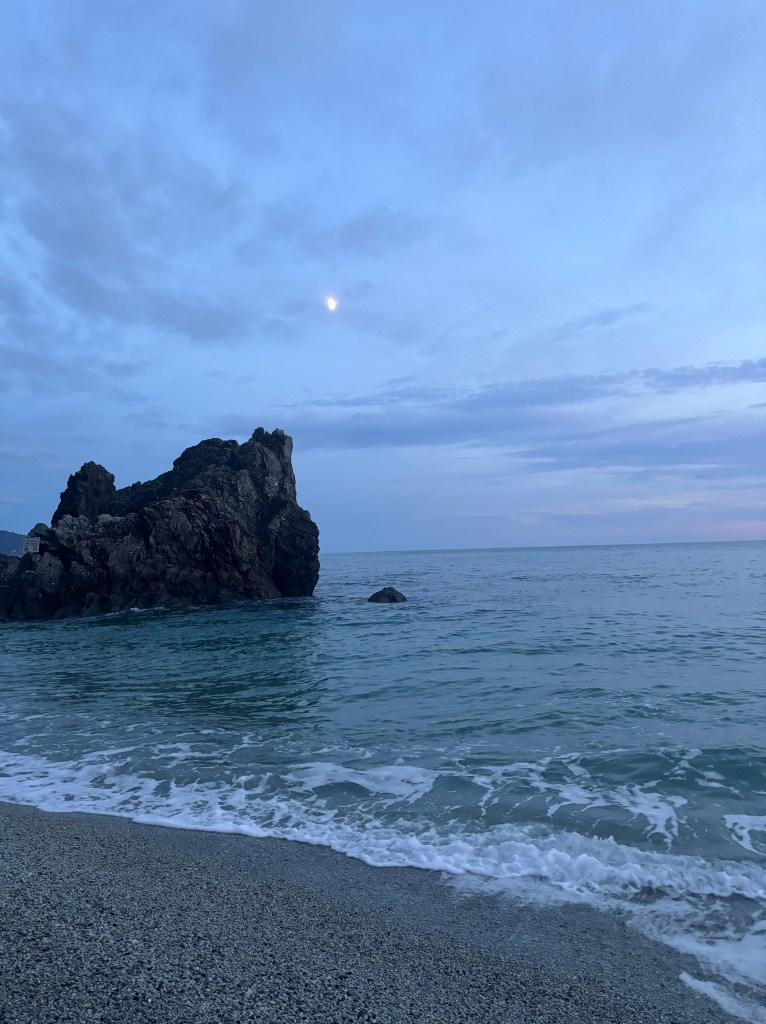
Nature can make people feel a great amount of respect and love. I often find that wandering by flowers or streams or butterflies naturally brings me a huge sense of peace, relieving me from the normal tensions of a day. Friends have expressed to me that the places they feel closest to God are always outside because that’s where they can most easily experience the handiwork of the divine. When I was wandering through the beautiful villages of Cinque Terre in Italy, it was impossible to not feel this awe for the natural world.

Cinque Terre, or “Five Lands,” is a region of Italy along the coast. Five villages were built right by the ocean along the steep hillsides. The beauty of the landscape and the architecture work together to create an atmosphere that no other place on earth could compare to. In a word, I would describe Cinque Terre as magical.
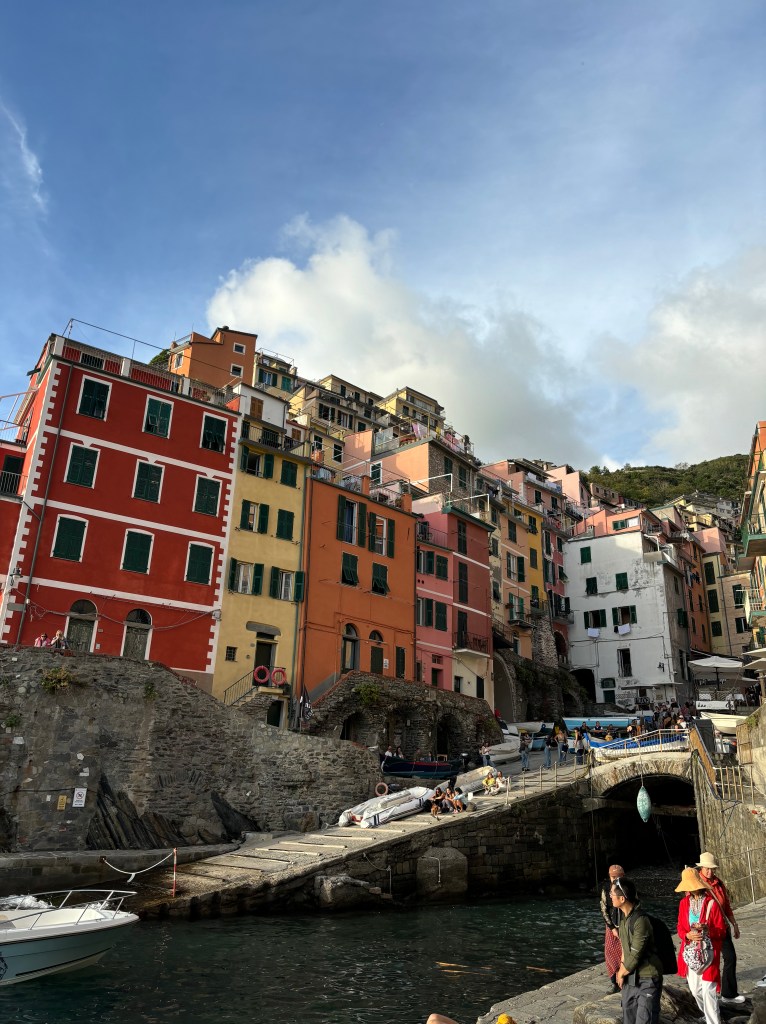
Wandering through these stunning towns and beaches, I thought about beliefs that center on the harmony of humankind and the natural world. One concept embodies this perfectly: ahimsa.

Many religions practice ahimsa, meaning non-violence, in one form or another. Buddhism, Hinduism, and Jainism all teach and practice this principle. However, in this discussion, I will focus my thoughts mainly on Jainism, as this faith focuses most intently on it.
For the builders of Cinque Terre, the idea of not harming the natural landscape expressed itself in colorful buildings, sloping roads, and position on the sea. For Jains, non-violence towards the world can be seen in many different ways. Particularly seen with monastic followers of this faith, there are many ways that Jains peacefully interact with the world. These include (but are not limited to) masks, brooms, and begging bowls.
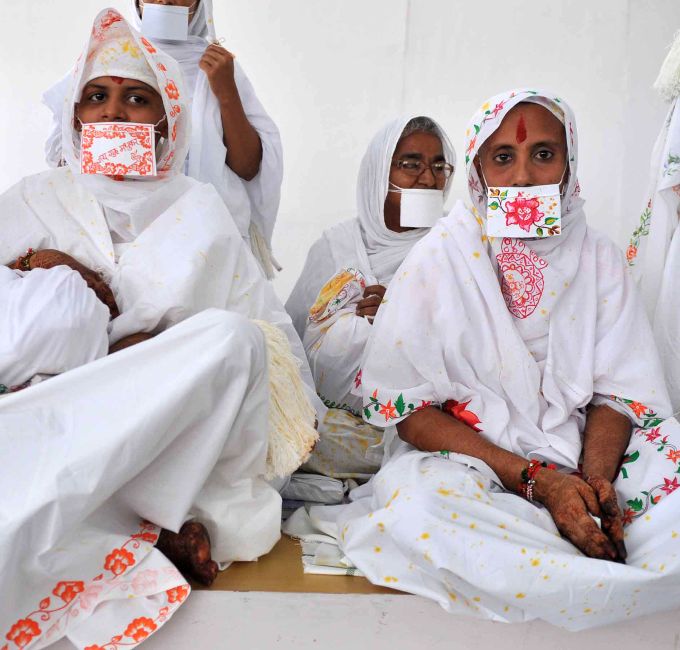
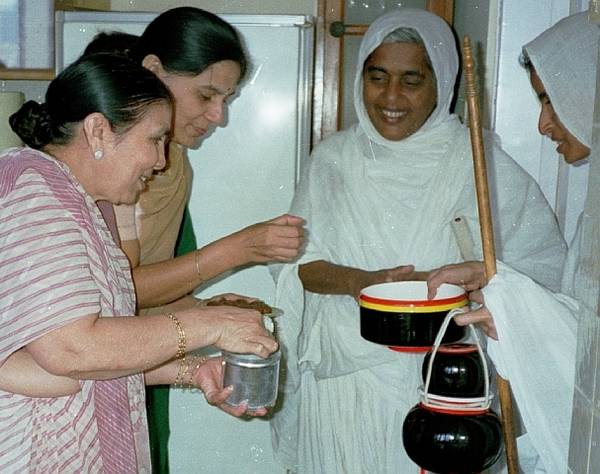
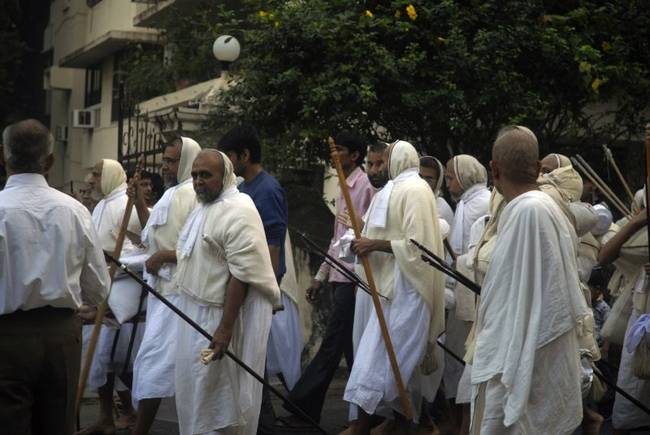
On the surface, it might be hard to see how these objects could help anyone practice ahimsa. However, they protect even the smallest forms of life from harm. The masks and brooms aide in protecting insects from accidental harm; the mask keeps people from accidentally breathing in a bug, while the broom allows followers to gently clear any bugs from the path before their feet might accidentally crush an innocent creature. Monks often beg for food, only accepting leftovers, because even the act of plucking a fruit or vegetable for yourself might be seen as a harmful action.
The practice of ahimsa varies from practitioner to practitioner. This is true of every religious tradition and principle. But I find it profoundly inspiring to learn about these Jain monastics that will do everything in their power to protect the world.

Whenever I think of ahimsa, it always leads me to meditate on what I could be doing to better protect the divine creation that is the world. What can you do to live in a more non-violent way?
Jain Temple
Places of religious significance and worship for Jains. “Temples associated with different faiths in South Asia often share architectural elements and display styles common in a region and historical period…[but Jain] religious buildings are specifically adapted to Jain spiritual ideas and ritual practices. There are three striking features of Jain religious buildings. Firstly, there is usually more than one shrine in a temple. Next, most are surrounded by additional buildings that form part of the religious building. Lastly, temples are frequently clustered together to produce temple complexes or ‘temple-cities’.”
“Jain temples.” Jainpedia. (https://jainpedia.org/themes/places/jain-temples/)
Mahabharata
“The Mahabharata is an ancient Indian epic where the main story revolves around two branches of a family – the Pandavas and Kauravas – who, in the Kurukshetra War, battle for the throne of Hastinapura. Interwoven into this narrative are several smaller stories about people dead or living, and philosophical discourses…At 100,000 verses, it is the longest epic poem ever written, generally thought to have been composed in the 4th century BCE or earlier…Including within it the Bhagavad Gita, the Mahabharata is one of the most important texts of ancient Indian, indeed world, literature.”
Anindita Basu. “Mahabharata.” World History Encyclopedia. (https://www.worldhistory.org/Mahabharata/)
Ahimsa
“…in the Indian religions of Jainism, Hinduism, and Buddhism, the ethical principle of not causing harm to other living things.”
“Ahimsa.” Britannica. (https://www.britannica.com/topic/ahimsa)
Hinduism
Also called Sanatana Dharma. Some consider it to be the world’s oldest religion. Indigenous religion of India and surrounding areas (in fact, “Hindu” truly refers only to a person that lives in this area, rather than someone that follows Sanatana Dharma). Came into being when the Dravidians interacted with the native people in this area. Written canon are the Shruti and the Smriti. Believe in reincarnation, gods, karma, and Nirvana (meaning release from the wheel of reincarnation and rejoining Brahman). No central leadership or required orthodoxy.
“Hinduism Basics.” Hindu American Foundation. (https://www.hinduamerican.org/hinduism-basics)
Jainism
Means “to conquer.” Religion that began in India that is thought to have started around the sixth or fifth century BCE. Founded by Mahavira, a monastic. Don’t believe in a god; believe in ascestics with authority who are referred to as “Jinas” or “Tirthankaras.” Mahavira is thought to have been the twenty-fourth Jina ever. Believe in reincarnation, trying to rid the soul of karma-matter, and release. Venerate scripture (Digambara and Svetambara) because it is believed that they came from the words of Mahavira in one way or another. Heavily focused on ahimsa. Monks will strain water, sweep roads, wear masks, etc. to keep from harming even the smallest life form.
“Jainism.” Minnesota Libraries Publishing Project. (https://mlpp.pressbooks.pub/worldreligionsthespiritsearching/chapter/jainism/)
Monastic
“…of or relating to monasteries or to monks or nuns; resembling (as in seclusion or ascetic simplicity) life in a monastery.”
“Monastic Definition & Meaning.” Merriam-Webster. (https://www.merriam-webster.com/dictionary/monastic)
 Hallow
Leave a comment