Action speaks louder than words but not nearly as often.
Mark Twain
Morocco uses lots of languages, all the time. On any given sign, you’ll typically see the same phrase repeated four times, usually in Arabic, French, Berber, and English. Occasionally, even more languages will be added to this list. My tour guide spoke upwards of seven languages, having learned languages like Spanish, Italian, and Japanese from leading tours.
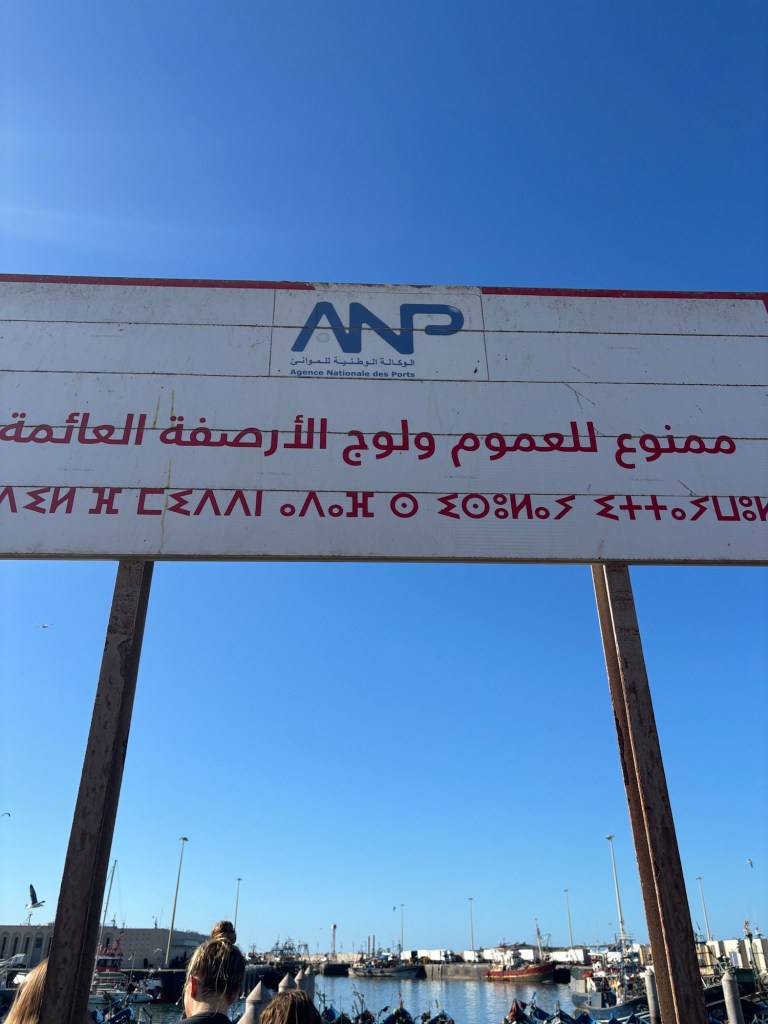
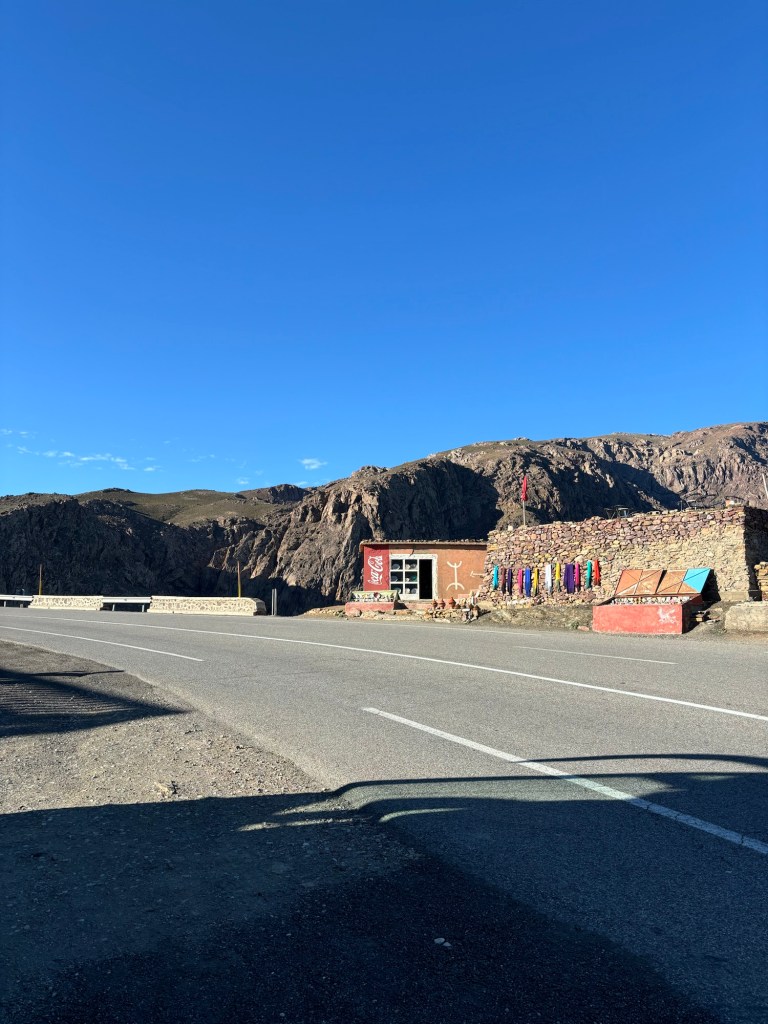
Being from America, we see this multiple languages thing as kind of crazy. Back at home, every sign is pretty much exclusively in English, maybe with a little bit of Spanish depending on the area you’re in. It’s been cool to learn while traveling that this isn’t the world’s norm. Many places will accommodate to any number of languages and cultures. I’ve been in areas on my travels where only a few people speak English, which is also very different from the United States. I’ve realized how difficult it is to try to live day-to-day when there are barriers to communicating with the people in your community.
Words are important. This is an obvious thing to say, so I won’t elaborate and try to prove it to you; I trust that if you’re reading this at all, you can see the importance of written language. Lately, though, I’ve been considering the importance of words in religious practice.
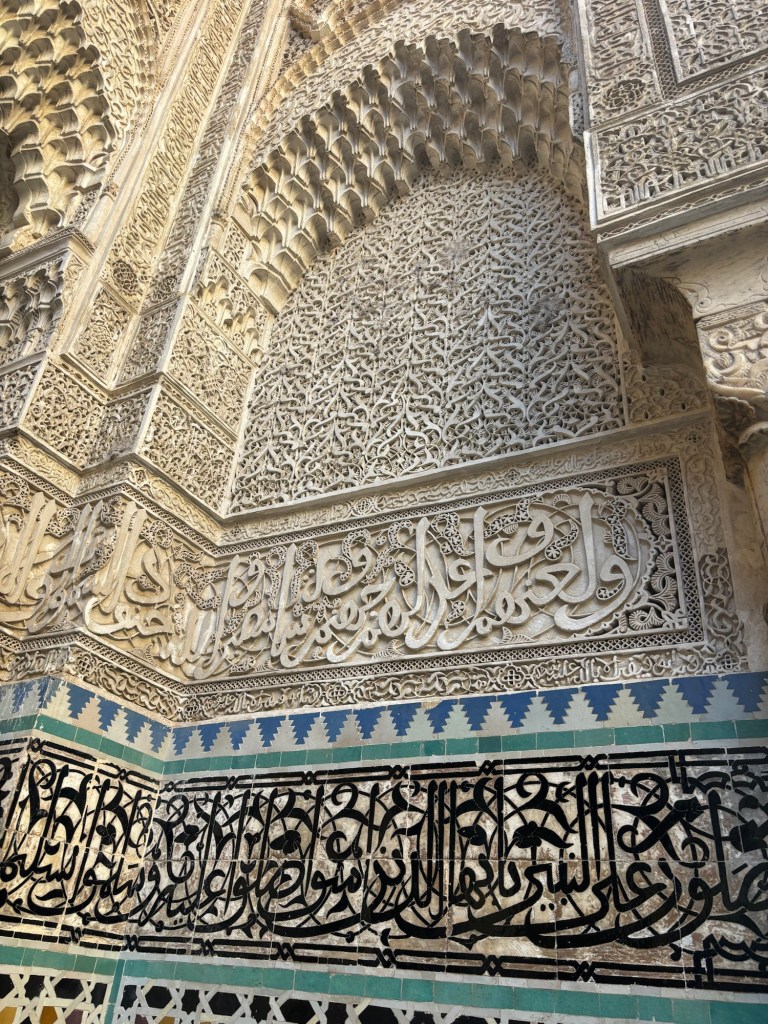
In a mosque, it’s easy to see the importance of writing in religion. Because it’s seen as blasphemous to portray Allah or anything else as a graven image, the rich and elaborate decor of these buildings center around scriptural text. Portions of the Qur’an and beautiful poetry are the artwork on the walls. These can become intricate, but even if they are too intricate to read, the message can still be felt. Allah has revealed the correct teachings and path to all those who will believe, and by making that our first priority, we will be able to draw closer to Allah.
Another recent observation about religious writing is in the Jewish tradition. Though Biblical Hebrew hasn’t been commonly spoken for hundreds and hundreds of years, Jewish worship still centers heavily on this language. This can be seen especially in the written name of G-d in the Tanakh, which is always treated in a holy way. For example, in the original manuscripts we still have of the Tanakh, the name remains un-voweled, making it harder to speak in vain because you don’t know the correct way to pronounce it anyway. The name is commonly replaced in aloud readings with “Adonai” (Lord) or “Ha-Shem” (The Name). It’s also important to note that wherever the name is written, it cannot be erased or thrown away normally because that would be disrespectful.
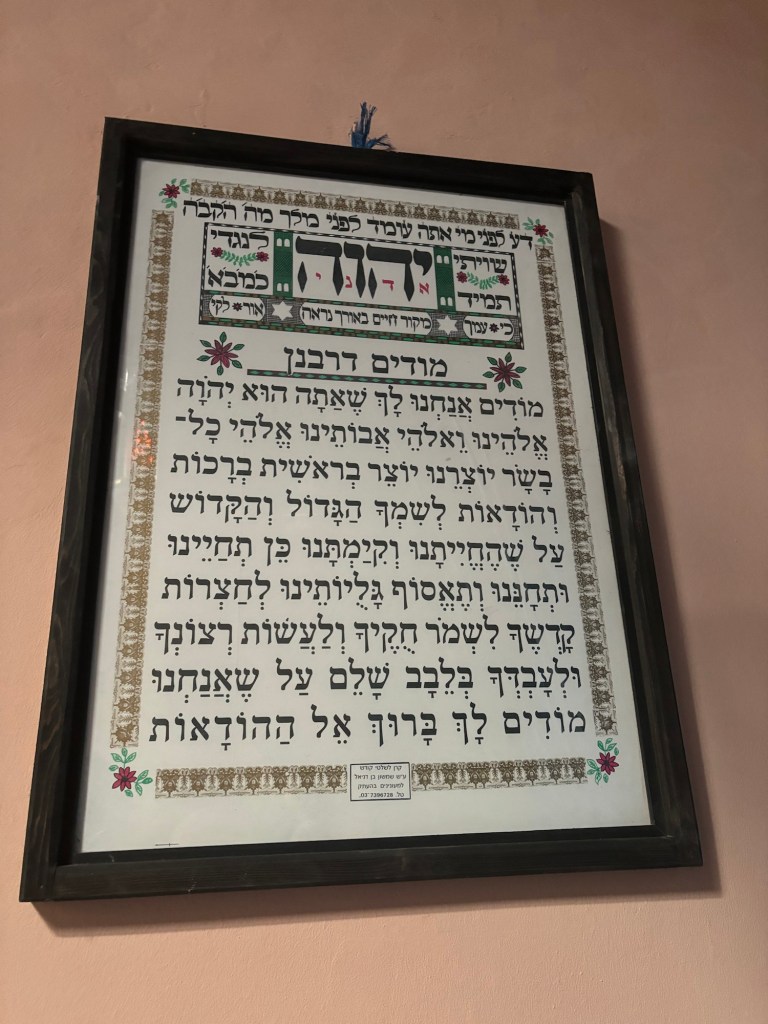
The words we say and write have real power in our spiritual lives. Through the practices of both Muslims and Jews, it’s easy to see that honoring holy words can help us draw closer to the divine.
What words do you find holy? Why?
Mosque/Masjid
“The Mosque is considered to be the community center for Muslims. Better known in Arabic as a Masjid, the mosque represents the nucleus of the Muslim family and community. Daily prayers are offered five times throughout segments of the day. After prayers are offered, Muslims gather for brief discussion and interaction with one another. This interaction maintains a level of unity in the community by fostering social, spiritual, and economic bonds. On Friday afternoons, Muslims hold their weekly congregational prayer known in the Arabic language as Jummah, which means congregation. This weekly ritual provides the Muslim community the opportunity to be reminded and encouraged to live a virtuous life, and to have a positive impact to improve the society and environment in which they live. The message is delivered by the Imam of the Mosque.”
“What is a Masjid.” Islamic Society of Central Florida. (https://iscf.org/masjid/what-is-a-masjid/)
Qur’an
Means “Recitations” in Arabic. The word of Allah, given to the Prophet Muhammad (PBUH) through the Archangel Gabriel. Recited by Muhammad (PBUH) to scribes, who wrote it for him. Best to read in Arabic because that is the language that it was given in; any translation is simply a translation of the Word of Allah, rather than the Word itself. Believed that it contains the knowledge that we must have from now until the Day of Judgment. Focused on the Oneness of God, the Afterlife and how to obtain happiness, prophets, justice and fairness, etc.
“About The Quran.” Quran.com. (https://quran.com/about-the-quran)
Tanakh
The Hebrew Scriptures. The word “Tanakh” functions somewhat like an acronym for what it contains; the Torah (Law), the Nevi’im (Prophets), and the Ketuvim (Writings) together are the Tanakh.
“The Tanakh.” Jewish Virtual Library. (https://www.jewishvirtuallibrary.org/the-tanakh)
 Hallow
Leave a comment