
Keep my wife’s name out your ***** mouth.
Will Smith
One of my very first experiences in India was going through customs in New Delhi. After a red eye flight and a longer than necessary wait in line, the customs officer was asking me about my trip. When I told him that I was visiting places to learn about religion, he asked me where, as there are so many religiously significant sites in the country. I couldn’t think of anything to say, so I said the first site I could remember in India: the Taj Mahal. He emphatically told me that the Taj Mahal was, in fact, not a religious site.
I recently visited the Taj Mahal. During my visit, I did learn that it is definitely not an inherently religious site. It wasn’t built for worship or out of any sort of devotion. However, there was a cool spiritual insight I had there that I wanted to share.

For those who may not know much about the Taj Mahal, it was constructed in the seventeenth century by a Mughal king. Rather than being an elaborate palace or fortified military outpost, however, this king used his riches to build a stunning mausoleum for his favorite wife. It was meant to be a heaven on earth for her body.
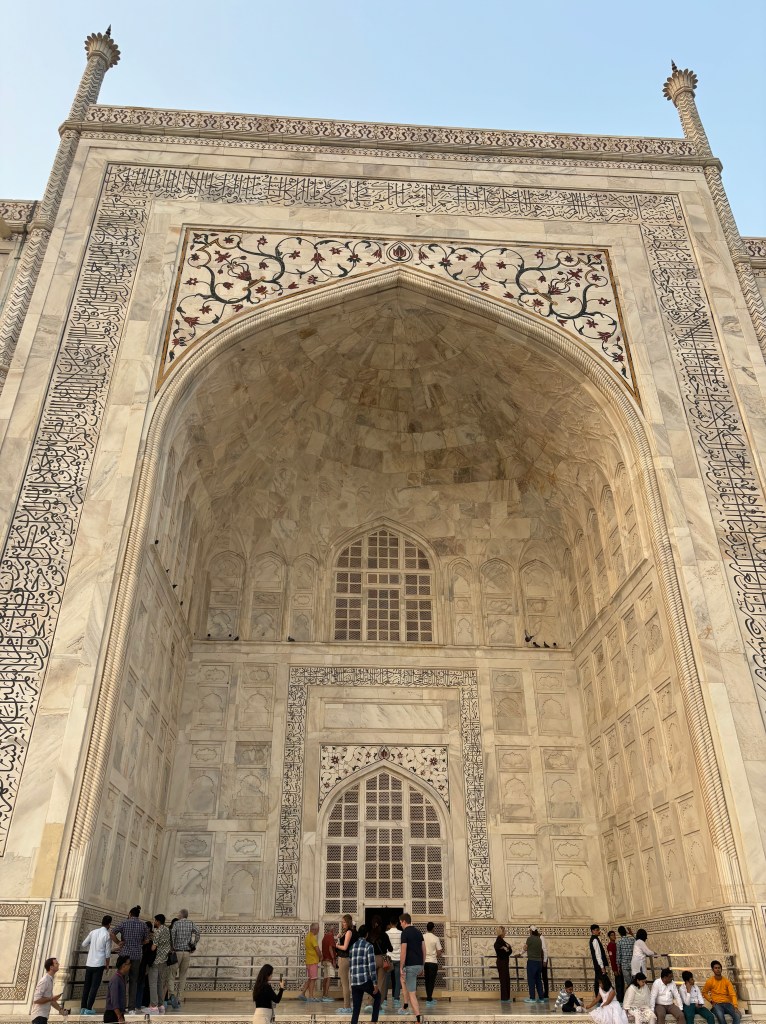
My guide told us that the wife buried here was named Mumtaz, and the building was originally called the Mumtaz Mahal in her honor. However, the king demanded the name be changed, and it began to be called the Taj Mahal, or “crown palace.” Why? He wanted to make sure the name of his wife was respected by the people.
This stood out to me because there are lots of examples of this sort of thing in world religions. In many instances, certain names or words shouldn’t be spoken out of respect. For instance, this is seen in the Judeo-Christian commandment to not speak the Lord’s name in vain.
I don’t have much to say other than that, I just think it’s cool to see reverence appear in this way in a normal human relationship.
Do you think that silence is a sign of spiritual respect? Why or why not?
 Hallow
Leave a comment