
“What day is it?” asked Pooh. “It’s today,” squeaked Piglet. “My favourite day,” said Pooh.
A. A Milne
The word “zen” is used often in Western vernacular to mean something like “relaxed” or “at peace.” The word itself, however, comes from Zen Buddhism, a branch of Mahayana Buddhism. During my time here in Japan, I’ve been learning about Buddhism in general, but specifically this branch.
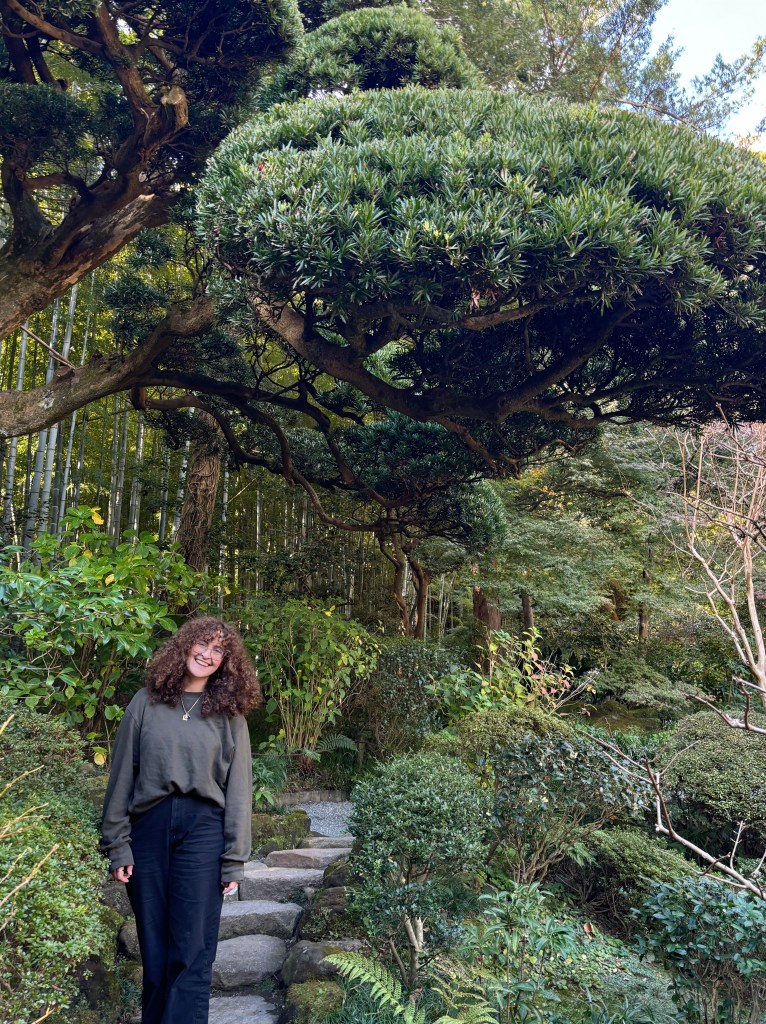
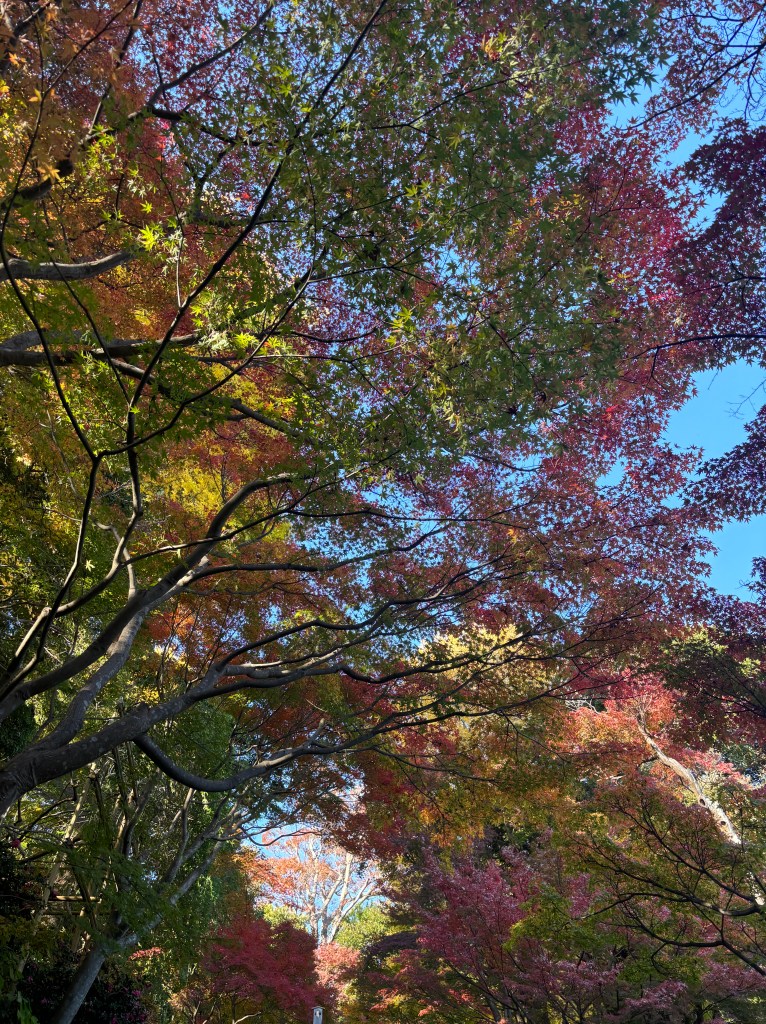
An aspect of Zen Buddhism that I love is the emphasis on the natural world. Their worship spaces are built to compliment the environment they’re in, letting nature be the real teacher. I never knew just how peaceful and spiritual taking a walk could be until I’ve strolled through the temple grounds here.
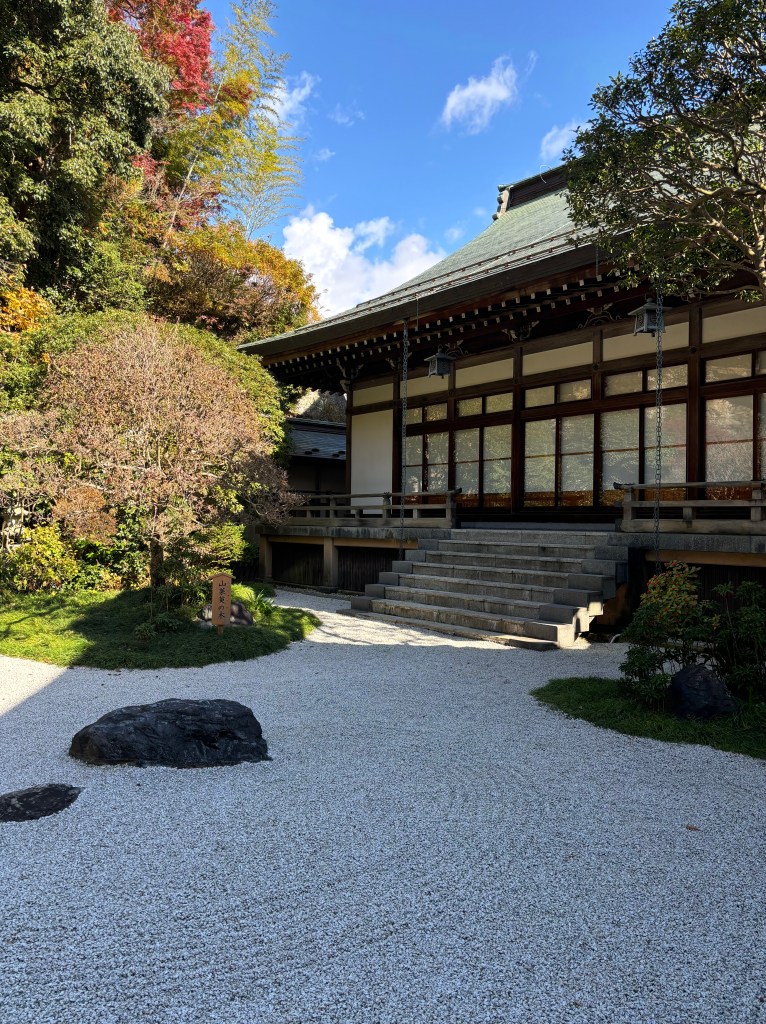
In order to reach the non-attachment they seek, many Zen Buddhists will utilize a number of practices to clear their minds. One that you might already be familiar with is gravel/sand raking, where intricate designs are mindfully executed in a large space. Though these patterns are beautiful to look at, the goal isn’t found in the finished product but the creative process. From what I understand, you are supposed to become single-minded and focused as you rake. My friends and I talked a lot about the planning and effort that would have to go into something like this; it’s not a casual practice at all. This simple practice is a huge mark of devotion.
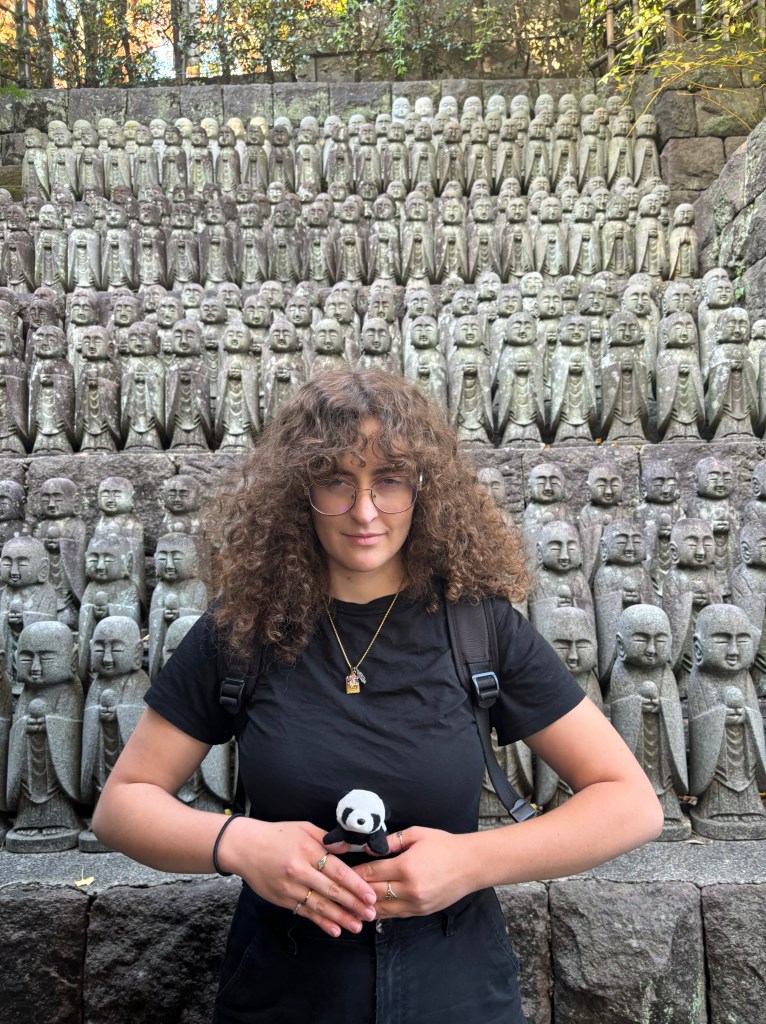
I really love the way that the Buddha and Buddhist monks are depicted at Buddhist temples. There’s nothing pretentious or intimidating about them. Commonly, they will be in restful positions with gentle facial expressions. It reminds me that the ideals and goals of this faith are different than my own, but still wonderful and valid. Aiming for that state of rest is a worthy endeavor indeed!
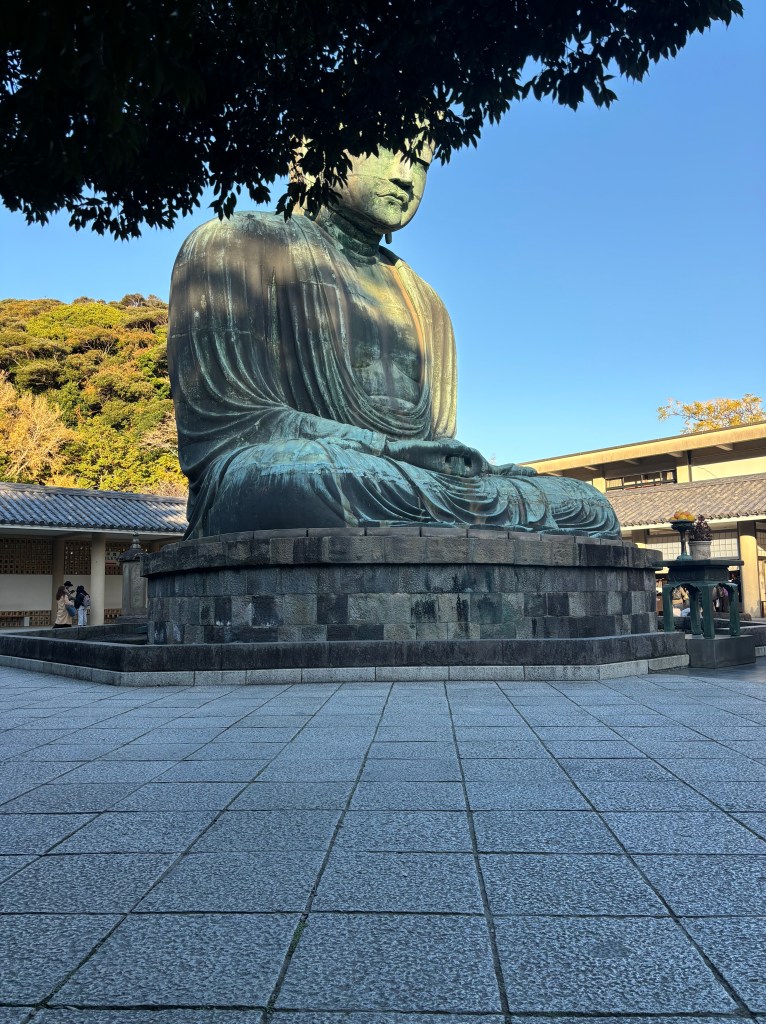
I hope you enjoyed my few thoughts about Zen Buddhism. I’d love to hear your perspective!
Zen Buddhism
“Zen is the Japanese name for a Buddhist tradition practiced by millions of people across the world. Historically, Zen practice originated in China, Korea, Japan, and Vietnam, and later came to the West…Zen is a Japanese transliteration of the Chinese word Chan, which is itself a transliteration of dhyana, the word for concentration or meditation in the ancient Indian language Sanskrit…When Buddhism came to China from India some 2,000 years ago, it encountered Daoism and Confucianism, absorbing some elements of both while rejecting others. Chan is the tradition that emerged. In this context, Chan refers to the quality of mind cultivated through sitting meditation, known as zazen in Japanese, which many Zen Buddhists consider to be the tradition’s most important practice.” Use of koans and other meditative practices to detach from the world. Monks and nuns. Worship in Buddhist temples.
“What is Zen Buddhism?” Tricycle: Buddhism for Beginners. (https://tricycle.org/beginners/buddhism/what-is-zen-buddhism/)
Mahayana Buddhism
“The second major vehicle of enlightenment…is the Mahayana (“great vehicle”) tradition. Though its origins are not precisely known, scholars believed it arose in the 1st century CE and existed side-by-side with Theravada for some time before becoming a separate tradition. Mahayanists view their teachings as the “second turning of the wheel of dharma.” (The first turning refers to the Buddha’s initial teachings after his enlightenment, when he introduced the four noble truths.)…the Mahayana tradition teaches that all beings inherently possess buddhanature, the seed of awakening: thus perfecting the qualities of a buddha the buddha-to-be can remove hindrances to realization even within a single lifetime. The Mahayana spiritual model is the bodhisattva…The Buddha in Mahayana is eternally present in a pantheon of buddhas, bodhisattvas, and enlightened beings who can be called on for support.”
“What is Mahayana Buddhism?” Tricycle: Buddhism for Beginners. (https://tricycle.org/beginners/buddhism/what-is-mahayana-buddhism/)
Buddhist Temple
Place of worship for Buddhist practitioners. All contain some type of representation of the Buddha. Might have a shrine (place where the image of the Buddha is kept) and gardens (used for reflection). Monks and nuns might practice and/or live at the temple. Commonly, shoes will be taken off and people will sit and meditate. Chanting and offerings are other common ways of worship at the temple.
“A Visit to a Buddhist Temple.” BBC Bitesize. (https://www.bbc.co.uk/bitesize/articles/zh9xm39)
 Hallow
Leave a comment