
Which way do you face?
Lynn G. Robbins
I’m yet again writing to you from a less than ideal WiFi situation, so forgive the change in format.
A common Islamic practice that many people in the world are aware of is prayer. Muslims have a unique and beautiful way of praying, and though I’m not a master on the topic, I’d like to share a little bit about it.
Sunni Muslims are expected to pray at least five times in a day, but all Muslims are expected to pray, no matter the method. They pray on carpet or rugs after performing a ritual cleansing, or ablution. Prayers are always done towards Mecca, a city in modern-day Saudi Arabia that is considered the holiest site in Islam.
The direction of prayer is so important that every mosque will have a built-in niche called a mihrab which shows the people which way to face. As I’ve visited mosques and observed different mihrabs, I’ve considered what way I face when I commune with the divine.
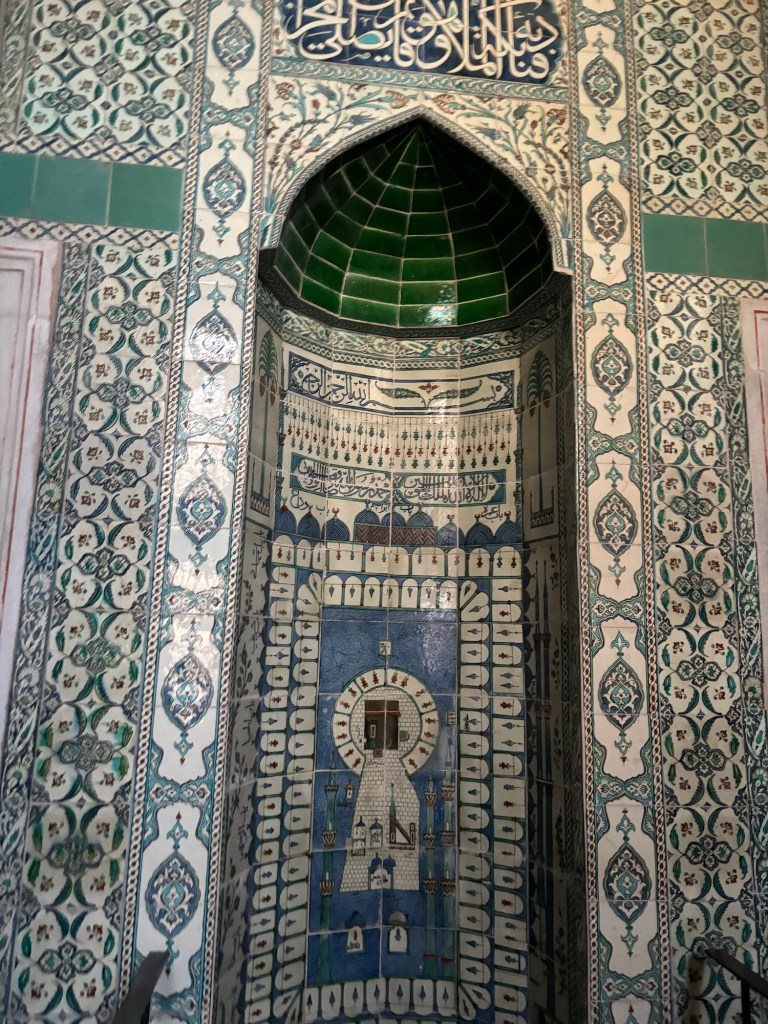
For many people in the world, physical direction during prayer is vital. For many others, this doesn’t matter at all. But, for the vast majority of people who pray, what truly matters is the way you’re facing both mentally and emotionally.
When you pray, which way do you face?
Sunni Islam
“Sunni, member of one of the two major branches of Islam, the branch that consists of the majority of that religion’s adherents. Sunni Muslims regard their denomination as the mainstream and traditionalist branch of Islam—as distinguished from the minority denomination, the Shiʿah. The Sunnis recognize the first four caliphs as the Prophet Muhammad’s (PBUH) rightful successors…Sunni orthodoxy is marked by an emphasis on the views and customs of the majority of the community, as distinguished from the views of peripheral groups…The Sunnis recognize the six “sound” books of Hadith, which contain the spoken tradition attributed to Muhammad. The Sunnis also accept as orthodox four schools of Islamic law: Ḥanafī, Ḥanbalī, Mālikī, and Shāfiʿī. In the early 21st century the Sunnis constituted the majority of Muslims in all countries except Iran, Iraq, Azerbaijan, Bahrain, and perhaps Lebanon. They numbered about 900 million in the early 21st century and constituted a majority of all the adherents of Islam.”
“Sunni.” Britannica. (https://www.britannica.com/topic/Sunni)
Wudu (Islamic Ablutions)
“The word ablution applies to washing some parts of the body preparatory to the performance of Prayer. This is a prerequisite which must be fulfilled, otherwise the Prayer will not be considered valid.” The ritual cleansing of the hands, mouth, nose, face, forearms, head, ears, neck, and feet. Must be performed with moving water.
“Ablution.” Al Islam. (https://www.alislam.org/book/salat/ablution/)
Mecca
The holiest city of Islam. Considered the birthplace of Islam. Located in present day Saudi Arabia. The birthplace of the Prophet Muhammad (PBUH), and where parts of the Qur’an were received. Location of the Kaaba. Where Muslims pilgrimage to when participating in the Hajj. Muslim prayers are done while facing Mecca.
“Why Is Mecca Important to Muslims?” Thepilgrim.co. (https://thepilgrim.co/why-is-mecca-important-to-muslims/)
Mosque/Masjid
“The Mosque is considered to be the community center for Muslims. Better known in Arabic as a Masjid, the mosque represents the nucleus of the Muslim family and community. Daily prayers are offered five times throughout segments of the day. After prayers are offered, Muslims gather for brief discussion and interaction with one another. This interaction maintains a level of unity in the community by fostering social, spiritual, and economic bonds. On Friday afternoons, Muslims hold their weekly congregational prayer known in the Arabic language as Jummah, which means congregation. This weekly ritual provides the Muslim community the opportunity to be reminded and encouraged to live a virtuous life, and to have a positive impact to improve the society and environment in which they live. The message is delivered by the Imam of the Mosque.”
“What is a Masjid.” Islamic Society of Central Florida. (https://iscf.org/masjid/what-is-a-masjid/)
Mihrab
“The most important element in any mosque is the mihrab, the niche that indicates the direction of Mecca, the Muslim holy pilgrimage site in Arabia, which Muslims face when praying.”
“Mihrab (Prayer Niche).” The Metropolitan Museum of Art. (https://www.metmuseum.org/art/collection/search/449537)

 Hallow
Leave a reply to marilyn4976 Cancel reply