
We knew not whether we were in heaven or on earth…for on earth there is no such splendor or such beauty, and we are at a loss how to describe it.
Nestor the Chronicler, on the beauty of the Hagia Sophia when it was first built
For my entire pilgrimage, there’s been one specific site that I’ve been most excited to see: the Hagia Sophia in Istanbul, Türkiye. Recently, I finally had the opportunity to visit this incredible building in person, and it was amazing. I want to share the lessons I took away from my time there.
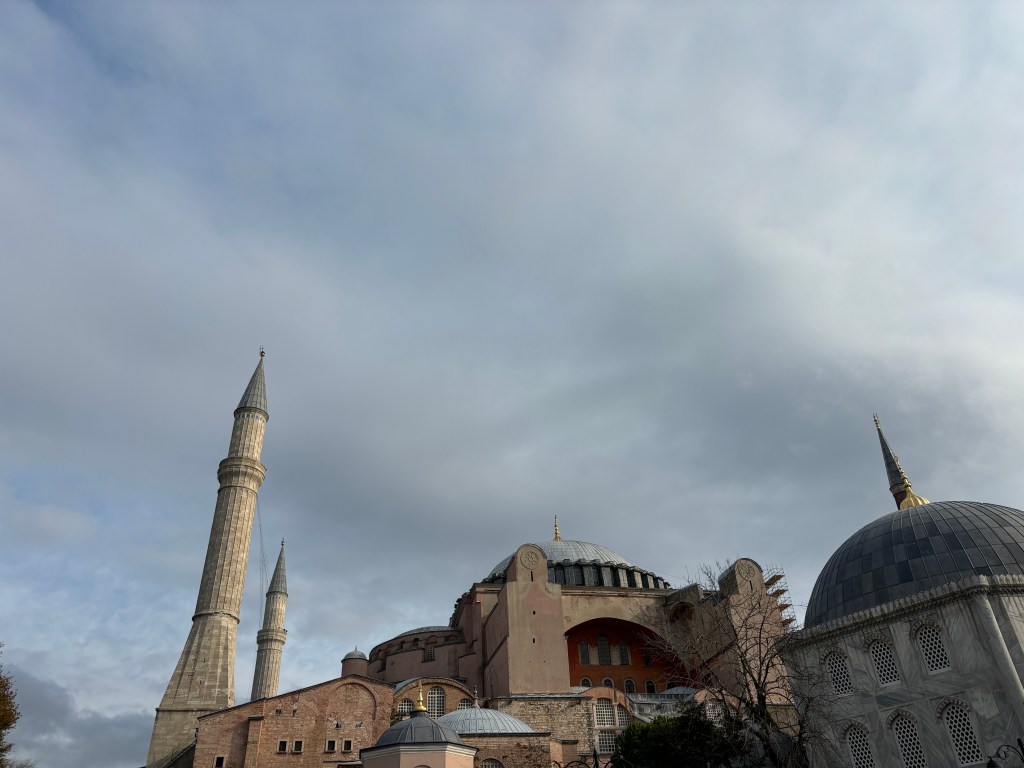
For a little bit of background information, the Hagia Sophia is one of the world’s most important religious buildings. Meaning “divine wisdom,” it was build by the Roman emperor Justinian more than two thousand years ago, after most of Constantinople was burned down in a revolt. At the time, it was a large Christian cathedral. The dome of the building was the largest at the time it was built and remains an architectural marvel to this very day. Throughout the centuries, it remained an important center of Christian worship.

When the Ottoman Empire took over Türkiye, however, the Hagia Sophia underwent a huge change. Keeping with Ottoman ideal, the Hagia Sophia was converted into a mosque. The devout Muslims that came to prominence in Istanbul used this already historical building as a place of prayer.
After hundreds of years, the Hagia Sophia was made into a museum. That wasn’t the end of its story as a religious space, however; just four years ago, the building was again made into a mosque. When you visit today, the bottom floor is reserved for praying Muslims, while the upper floor is where visitors can walk around to observe this historical masterpiece.

On the upper floors, and even a few places on the ground level, you can see a few traces of the original Christian art. You can identify this mostly by the presence of people and their faces in the art, as this typically isn’t seen in Islamic art. Instead, the art in mosques and other predominantly Muslim spaces will feature writing and geometric designs. So, why are these Christian pieces preserved in this mosque?
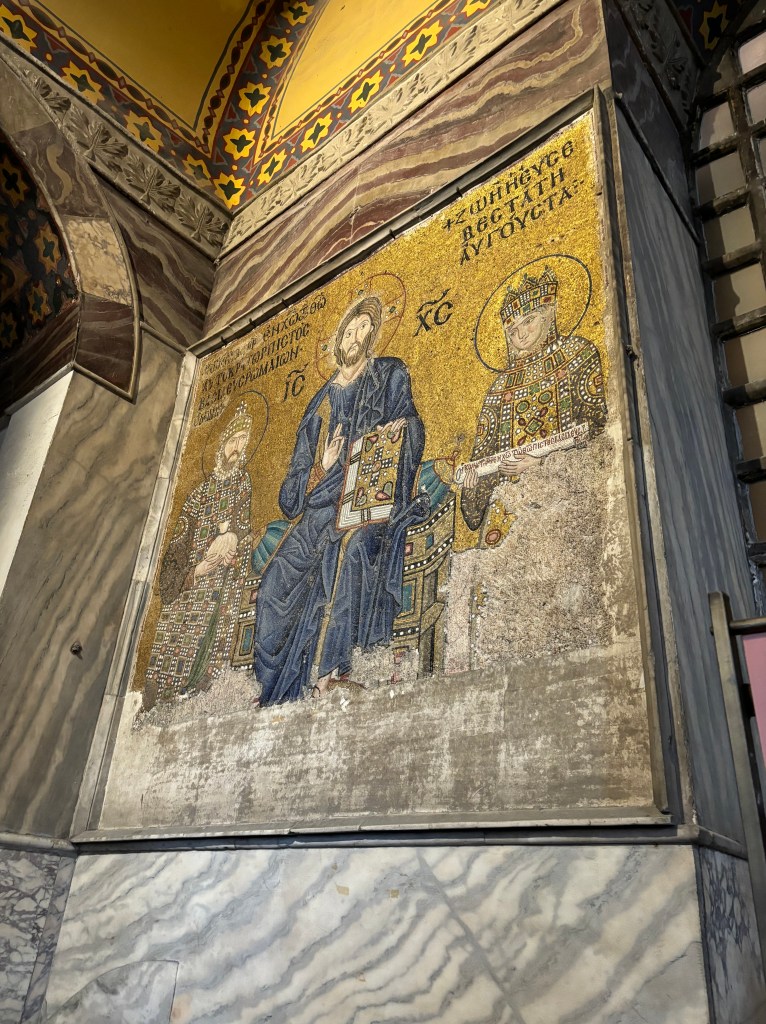
Right before the Hagia Sophia became a mosque again, the museum was restoring some of the most important mosaics and artworks in the old building. When it was first built, the cathedral was nearly entirely covered in gold leaf, giving viewers the impression of a heavenly world when the sun hit it right. Though the lower levels of gold are no longer there, this gold color can still be seen in the upper mosaics.
I’m no art historian, so don’t quote me on any of this. But, from what I understand, all of the Christian artwork was covered up with plaster the first time it became a mosque. Instead of completely destroying and dismantling it, like other methods of iconoclasm might have done, the plaster held the mosaics in good condition. Then, when it became a mosque again, many of these important pieces were again left uncovered for visitors.
Just being here made me think of the sacrifices of good Christians, good Muslims, and all good people who want to respect people that are different than them. I especially revere the Ottomans that chose to cover the art instead of destroy it, and those Muslim leaders that just recently chose to leave it uncovered. Putting the needs of others before your own is a divine quality, and something that I want to foster in myself.
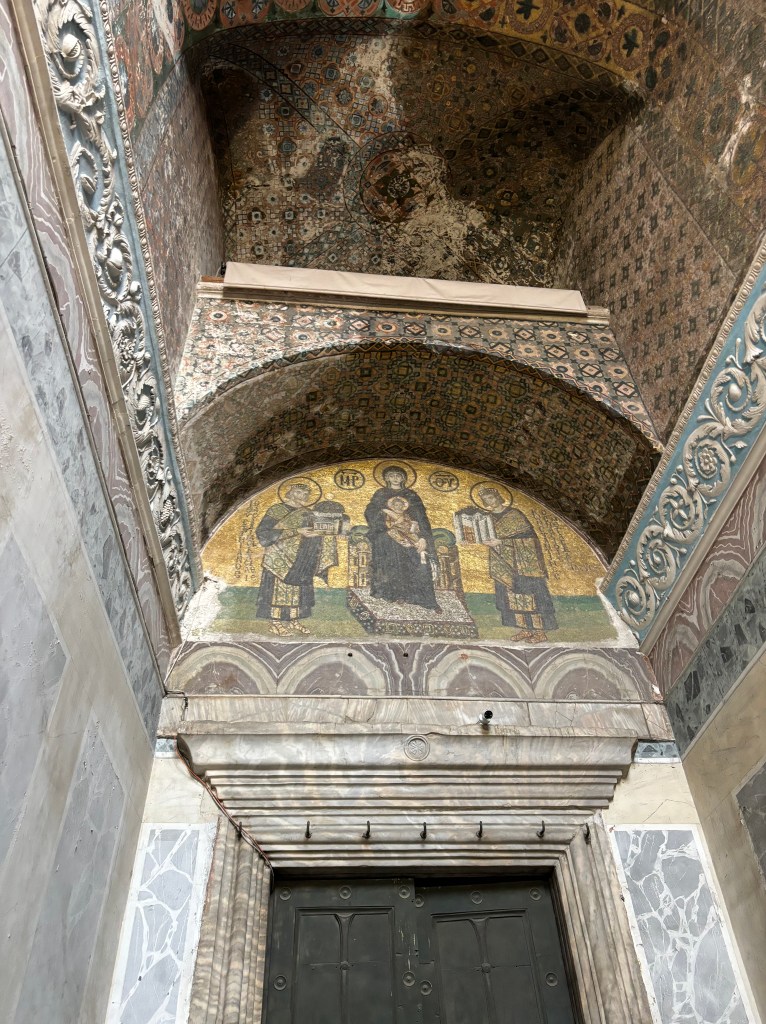
I loved being in the Hagia Sophia, but I love the idea of it more. There are very few buildings with as much religious significance as this one. Every hand that has contributed to this building has in one way or another sought to glorify the divine. All visitors to this space, myself included, don’t feel the spirit of just a building, but the spirit of everyone who has loved it before us.
The name of this building means more to me now than it ever has before. Because of my experience, I believe that divine wisdom includes wisely choosing priorities, always keeping everyone in mind. I’m thankful for my belief that there is a higher power with divine wisdom that keeps all people everywhere in mind.
What does divine wisdom mean to you?
Cathedral
“A cathedral is the seat of the bishop and a centre of worship and mission. The primary purpose of a cathedral is to be a place of Christian worship but it is also often the oldest building in continuous use in its surrounding area and of significance to the heritage, culture and community life of the area it serves.”
“What is a cathedral?” The Association of English Cathedrals. (https://www.englishcathedrals.co.uk/about-us/)
Mosque/Masjid
“The Mosque is considered to be the community center for Muslims. Better known in Arabic as a Masjid, the mosque represents the nucleus of the Muslim family and community. Daily prayers are offered five times throughout segments of the day. After prayers are offered, Muslims gather for brief discussion and interaction with one another. This interaction maintains a level of unity in the community by fostering social, spiritual, and economic bonds. On Friday afternoons, Muslims hold their weekly congregational prayer known in the Arabic language as Jummah, which means congregation. This weekly ritual provides the Muslim community the opportunity to be reminded and encouraged to live a virtuous life, and to have a positive impact to improve the society and environment in which they live. The message is delivered by the Imam of the Mosque.”
“What is a Masjid.” Islamic Society of Central Florida. (https://iscf.org/masjid/what-is-a-masjid/)
Iconoclasm
“Iconoclasm refers to the destruction of images or hostility toward visual representations in general.”
“Iconoclasm.” Lumenlearning.com. (https://courses.lumenlearning.com/suny-arthistory1/chapter/iconoclasm/)

 Hallow
Leave a reply to marilyn4976 Cancel reply